The short answer is yes: copper sets off any metal detector, and it does so with great decisiveness. The reason is physical. An induction detector generates an electromagnetic field through its coil and listens for the response of metal objects that enter it. The better a metal conducts, the stronger that response. Copper is the second most conductive metal after silver, so it ranks among the targets that detectors pick up best of all.
The reference source, the Serious Detecting blog, sums it up this way: a coin, a copper pipe or a copper wire produces one of the strongest and cleanest signals a detector can return. It is no coincidence that copper is treated as a target that machines are, in practice, tuned for, rather than as a metal that merely makes them beep.
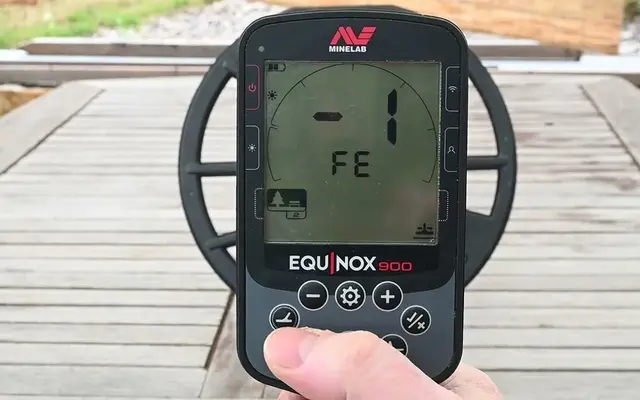
For coin hunters, the useful question is where copper falls on the Target ID scale, the numerical value with which the display estimates the nature of an object. Copper coins sit in the upper part of the scale, just below silver, with a high and well-defined tone. In practice, copper does not end up in the low, uncertain range where iron and small pieces of trash pile up. It falls instead in the coin zone, a few steps from silver. This means that if you work with a discrimination setting that lets coins through, copper is almost always signaled.
An important point concerns the patina. A copper coin left a long time in the ground becomes covered with a greenish-brown crust, and it is natural to think this makes it less detectable. According to the source, this is not so: the change affects the surface, while the metal underneath conducts just as it did the day it was minted. A greenish ancient coin therefore gives a signal almost as strong as a bright copper one. For diggers, the resulting advice is simple: do not discard a beep just because you assume the object is too corroded to respond well.
Copper also has a use that has little to do with treasure hunting. Precisely because it conducts so well, a detector is well suited to tracing buried copper water pipes, old service connections and abandoned cables before you put a spade in the ground. The source describes this as one of the most practical non-treasure uses of these tools, and says that homeowners and building contractors do it regularly. Avoiding a cut pipe or a punctured live line saves time and money in very concrete terms.
On depth, the source refers to standard hobby detectors capable of locating normal residential copper lines at one foot or more, that is, about 30 centimeters or more. An intuitive rule applies: the larger the pipe, the deeper it can be located. These are orders of magnitude given by the source, and the actual result changes with the model, the soil, and the diameter and condition of the pipe. Before digging, the source, which takes a US perspective, points to the number 811, the American service that marks underground utilities. In Italy the same principle applies: check with the network operator before pushing a spade into the ground.
At security checkpoints the situation is similar. Walk-through portals and handheld wands, according to the source, detect copper without difficulty, and coins, tools and wires set off the alarm reliably. The high conductivity that delights coin hunters is the same reason it is hard to hide a copper object from this type of instrument.
A few practical consequences for those heading out with the machine. First: a high, clean signal in the coin zone is no guarantee of value, because scrap copper wire and fragments fall into the same Target ID range. Second: the strength of the signal should not be read as an indication of how large or deep an object is, because highly conductive targets respond well even when they are small. Third: after the beep, it is always worth pinpointing calmly. The source itself concludes by noting that a good detector does most of the work and a pinpointer completes the recovery, narrowing the area to dig and protecting the object from spade strikes.
In short, copper is among the easiest metals to find: a strong signal, a high tone, a Target ID close to silver's, and a patina that does not hide it. Whether you are searching for ancient coins or simply want to know where a pipe runs under the garden, the detector sees it without difficulty. The hard part, as always, is interpreting what is really under the coil.