A metal detecting story comes from Dorset, in southern England, and stars a detectorist who took up the hobby after retiring in 2016. According to the blog of the British shop Regton, in the section devoted to customers' finds, within just a few months he made two discoveries most detectorists can only dream of.
His first step followed an unusual path. The most common advice for beginners is to buy a cheap machine to find out whether the hobby really suits them. He, however, was convinced that metal detecting was the pastime he had been looking for, and chose to invest straight away in a high-end detector. After gathering information, he decided to turn to the Regton shop in Birmingham, valued for its expertise and support. He travelled from Dorset to speak with the staff and weigh up the alternatives.
In the end he left with the model he had in mind from the start, the XP Deus I. He liked its light weight, wireless connection, good reputation and ease of handling.
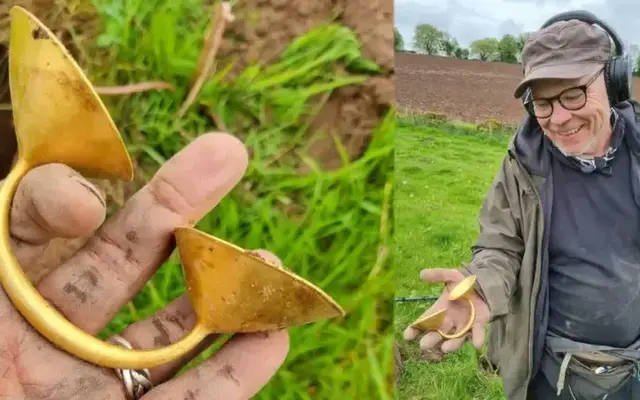
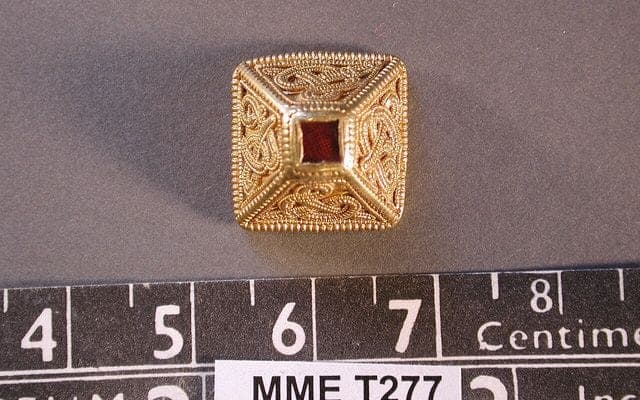
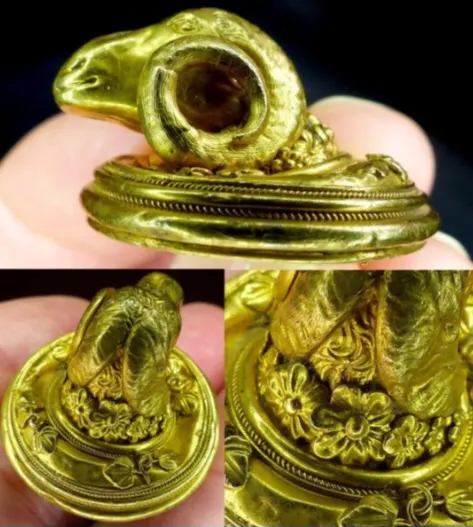
A few weeks after the purchase came the first outing on a field where he had permission to search. The ground was frozen and full of stones, flint and scrap metal. After five hours of searching nothing of historical significance had turned up, and giving up would have been easy. Instead, a gold ram's head brooch emerged from the soil. For a beginner, he recalls, it was "dream stuff."
The find was declared Treasure. At the end of the lengthy process required by this procedure, the brooch was returned to the person who had found it.
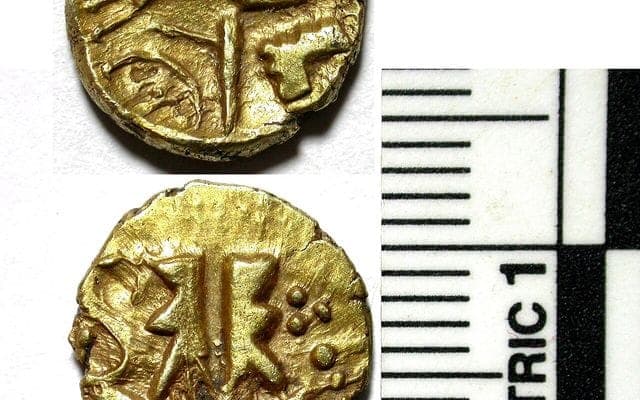
The second find came about six weeks later, in another area of Dorset. The Deus I signalled a lost hoard of six extremely rare Iron Age gold staters. Numismatist John Sills classified them as "probably the earliest British gold coinage." The coins too were declared Treasure and, once the process was complete, were acquired by the Dorset Museum in Dorchester.
Since then the detectorist has not stopped searching, and has added an XP Deus II to his first machine. With it he has recovered a series of Roman, medieval and other finds, often in difficult conditions and alongside his search partner. According to Regton, his method is not limited to switching on the machine and trusting the discrimination number: over time he has developed programs and settings suited to his style.
Among these is the Sensitive Full Tones program of the Deus II. XP describes it as particularly suited to polluted and mineralised ground. In this mode each target index produces a different tone based on conductivity. Being able to read the tones, and not just the displayed value, helps decide which signals deserve digging, especially where the soil is rich in metal scrap.
The available text also mentions an unusual find from May 2026. It was made in a stubble field, with hard, dry ground, where the pair had previously found Roman and medieval coins and artefacts. However, the part of the source describing the find is incomplete, so its details cannot be reported.
The case shows the value of the Treasure procedure in the United Kingdom. Declared finds are valued and can enter public collections, as happened with the staters, or be returned to the people who found them. For detectorists, then, a find comes with an official path of protection and documentation. To protect the site, the source does not give the exact location of the finds, which remain described only generally as being in Dorset.