Dreaming of finding buried treasure is common, but few people actually do. According to Live Science, a man from central Norway had exactly that experience shortly before Christmas of the previous year, relative to the article's publication (November 2, 2022), while walking with a metal detector in a field near his home. The man is Pawel Bednarski, who unearthed a hoard of Viking-age silver fragments.
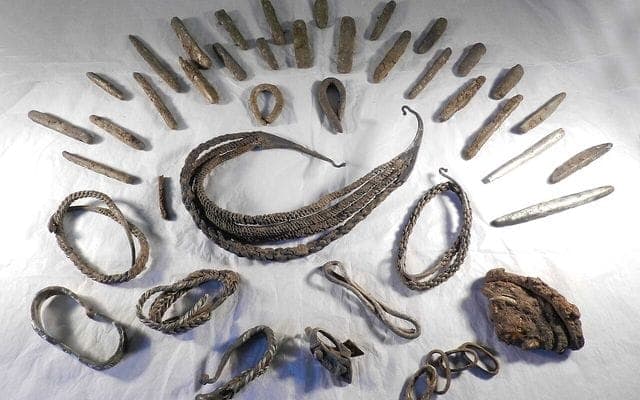
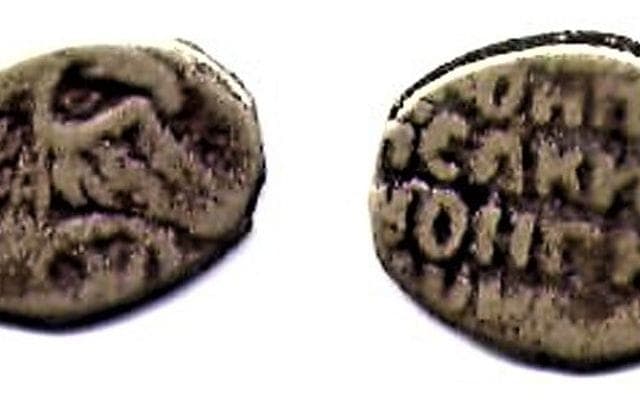
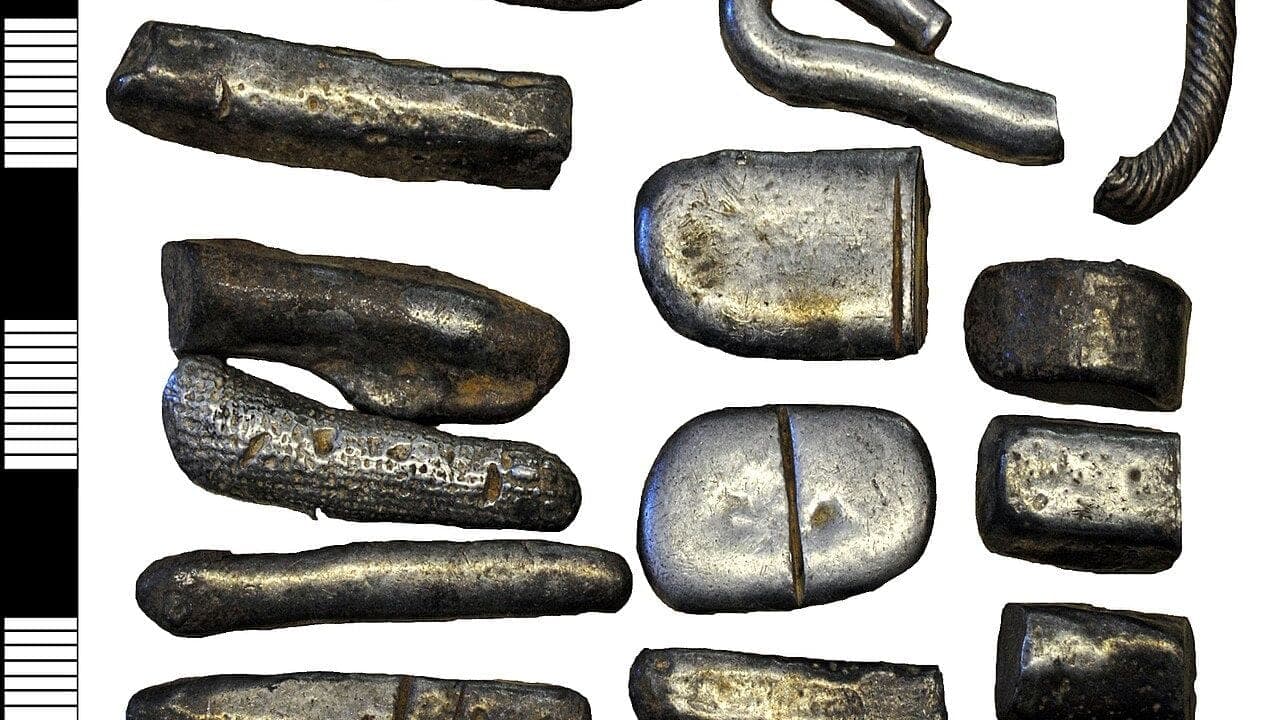
The finds lay under just a couple of inches of soil. At first, Bednarski was not sure what he had in his hands: among the pieces were two rings, what appeared to be Arabic coins cut into parts, and fragments of a silver bracelet. After contacting local historians and archaeologists, the picture became clear: it was an important find.
Birgit Maixner, an archaeologist at the Norwegian University of Science and Technology (NTNU) in Trondheim, said in a press release that no Viking treasure of this size had been discovered in Norway in many years. The rings, she explained, are a common type in hoards but not in burials of the period. For this reason, they were likely used as a means of payment rather than as jewelry.
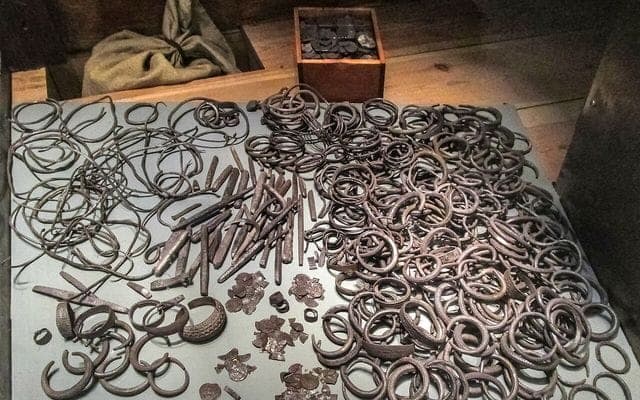
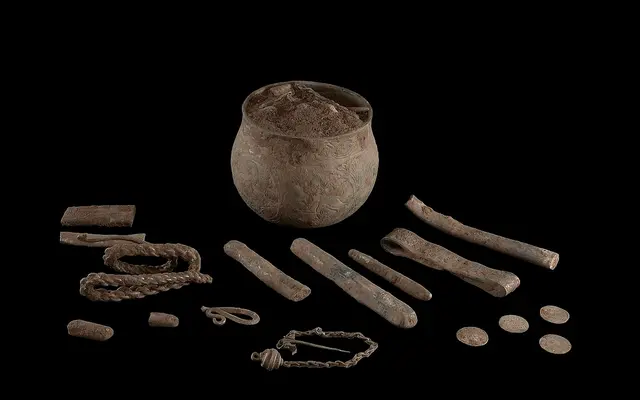
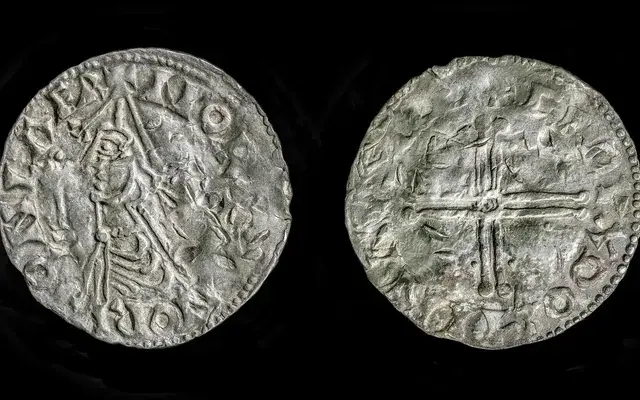
In all, there are 46 fragments weighing 42 grams, roughly the weight of a golf ball. They date back about 1,100 years, to between the 8th and 9th centuries. The fragmentation of the objects suggests they were not simply personal belongings but also money. The Vikings, in fact, relied on an economy based on precious metal by weight: instead of trading one good for another, such as a sheep for a cow, they paid with pieces of precious metal of a set weight. Minted coins were not in common use in Norway until the end of the 9th century.
According to Maixner, that weight-based system was in use during the transition between a barter economy and a monetary economy. Based on what is known today about the Vikings' system of value, the silver found was worth a little more than half a cow: a significant sum for the time, considering that a medium-sized farm owned an average of five. Small balance scales with pans were used to weigh precious metals, such as the one found in a burial mound at Björkhaug, in Steinkjer, Norway.
Several questions remain open about where the objects came from. Maixner does not know how they reached Norway. The Arabic coins, the main source of silver in Scandinavia during the Viking Age, are older than those usually found in the country: Norse treasures typically contain examples from the 9th and 10th centuries, whereas these date to the 8th. The bracelet, moreover, resembles in type the jewelry usually found in Denmark.
For those who practice metal detecting, the case offers a concrete lesson: the finds were at a shallow depth, in a field near home, and their historical value emerged only through consultation with experts. The decisive step was precisely turning to historians and archaeologists instead of treating the fragments as mere pieces of metal, which made it possible to place the find in context and understand its economic significance.
Live Science's account fits into a series of recent discoveries linked to metal detecting in Europe, including the largest Viking-age silver hoard in Finland and one in Denmark. The Norwegian treasure, though smaller, remains valuable for what it reveals about how silver circulated and was used as money before the spread of minted coins.