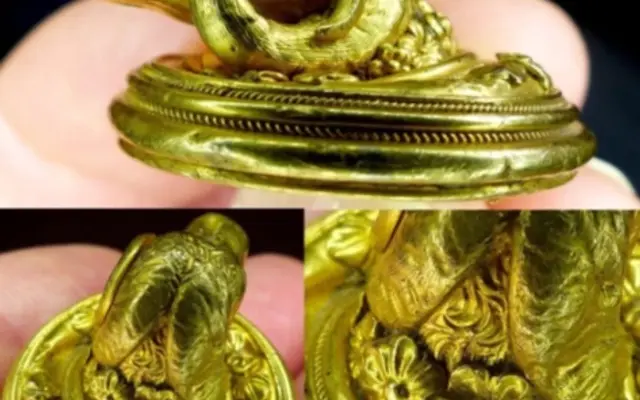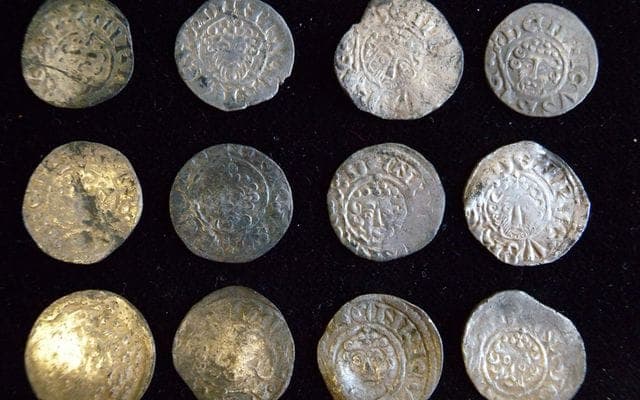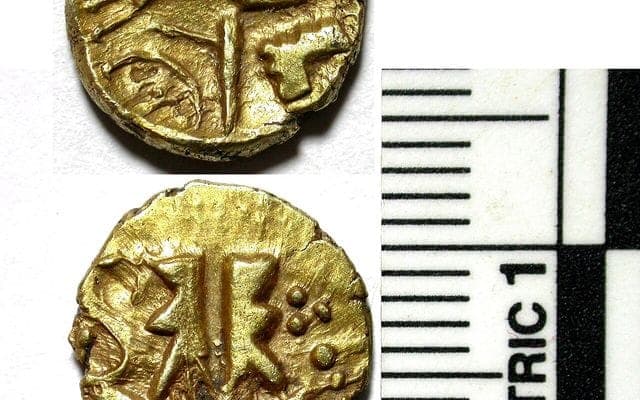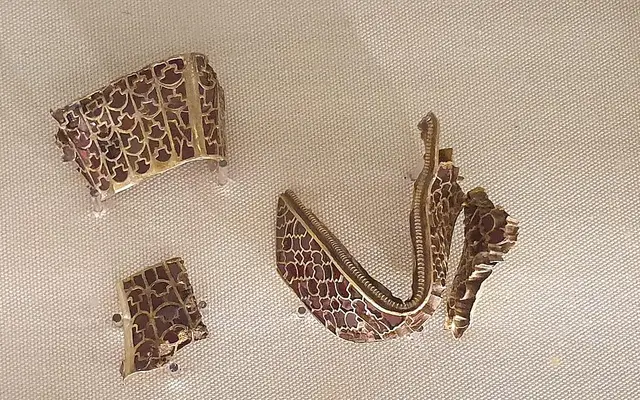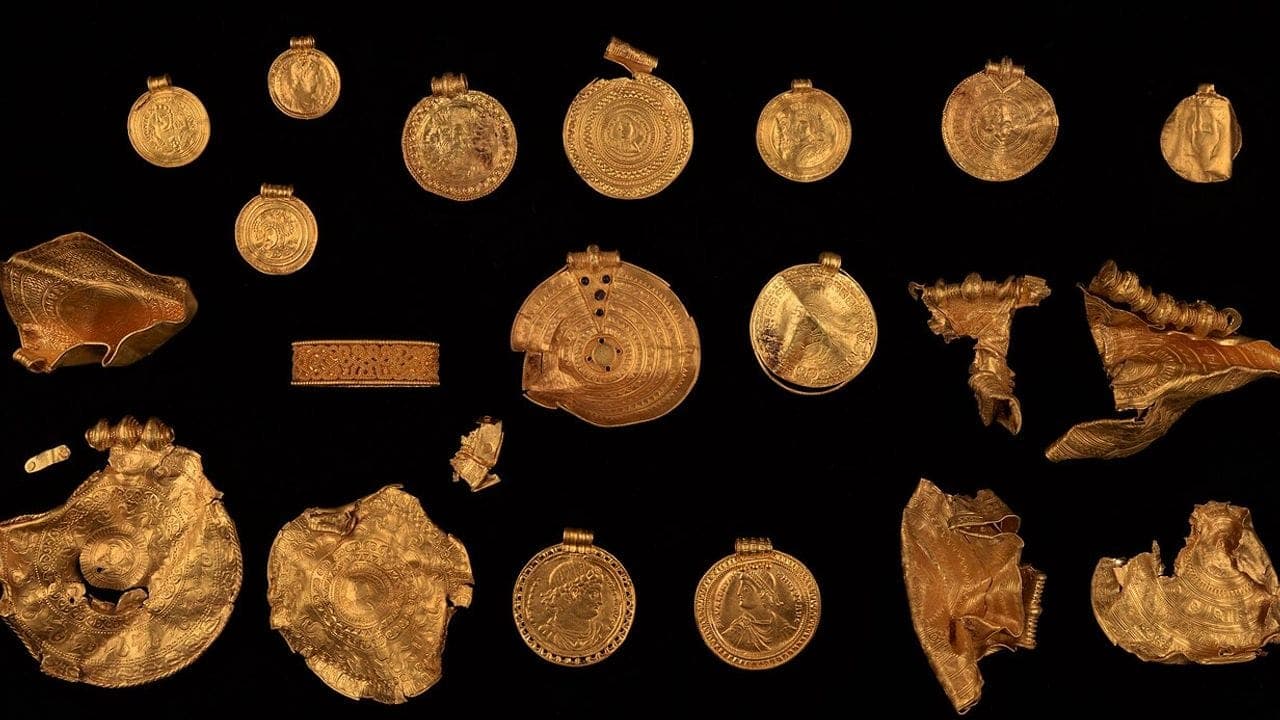
An amateur metal detectorist has unearthed one of the most important gold treasures ever discovered in Denmark. According to Live Science, which cites a press release issued on September 9 by the Vejle Museums, the hoard dates to the 6th century, in the Iron Age, and has been dubbed the “Vindelev treasure” after the place where it was found.
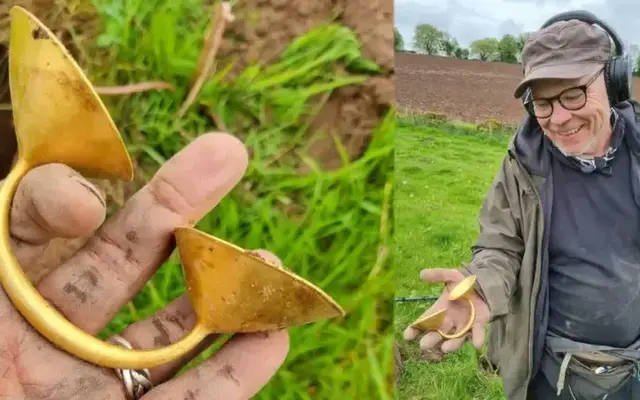
The finder is Ole Ginnerup Schytz, an amateur detectorist who was searching a plot of land owned by a former classmate, in the town of Vindelev. Using a metal detector he had only recently bought, he picked up a signal within a few hours, indicating something interesting beneath the surface. According to representatives of the Vejle Museums, it is one of the “largest, richest and most beautiful gold treasures in Danish history.”
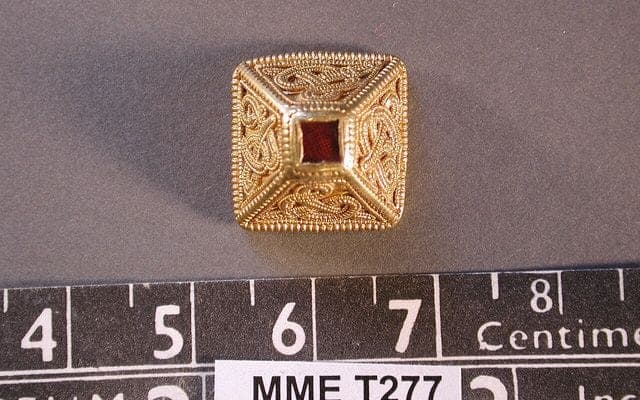
The hoard, about 1,500 years old, contains nearly a kilogram of gold (about 2.2 pounds). Among the objects stand out elaborate jewelry, Roman coins and large medallions the size of a saucer, known as bracteates. Some Roman coins were turned into jewelry using a working technique that, according to archaeologists, had never been observed before. The oldest core of the find also includes a heavy gold coin bearing the image of Constantine the Great (AD 272–337), the first Roman emperor to convert to Christianity.
Following the report, the site was excavated by archaeologists from the Vejle Museums in cooperation with the National Museum of Denmark. The investigation established that the gold objects had been buried inside a longhouse, the typical large dwelling of the period. This detail suggests that Vindelev may have been a village of great power during the Iron Age.
Scholars believe the treasure was buried by a person of very high rank. “Only a member of the absolute elite of society could have gathered a treasure like this,” said Mads Ravn, head of research at the Vejle Museums. The finding is all the more surprising because Vindelev lies about 8 kilometers from Jelling, the cultural center where, in the 10th century, the first Danish kings united (or reunited) the country. Until now, Ravn explained, nothing suggested that a warlord or a previously unknown chieftain had lived in this area, long before the kingdom of Denmark emerged in the following centuries.
The treasure nonetheless suggests that this chieftain had managed to accumulate wealth and attract highly skilled craftsmen, who made the objects. Several pieces bear motifs and runic inscriptions that, according to archaeologists, probably refer to contemporary rulers, while others seem linked to Norse mythology.
One example is a bracteate depicting a man with braided hair, surrounded by a horse, a bird and another human figure, together with runes that could be read as “houaʀ,” meaning “the high one.” The term could refer to a ruler, perhaps the same chieftain who hid the hoard. According to later Norse mythology, however, the word is associated with the god Odin, as archaeologists point out.
The Vindelev case once again demonstrates the contribution that amateur detectorists can make to historical knowledge, if they work correctly and report their finds. Here, the prompt intervention of experts made it possible to document the context of deposition, the longhouse, a piece of information that alone changed the reading of the site and of the village's role in the Iron Age.