The Family Garden and Its Buried History: A Beginner's Story
A hobbyist recounts how his first metal detector revealed the farming past of the land where his parents live.
November 20, 2025
ShareLink copied!
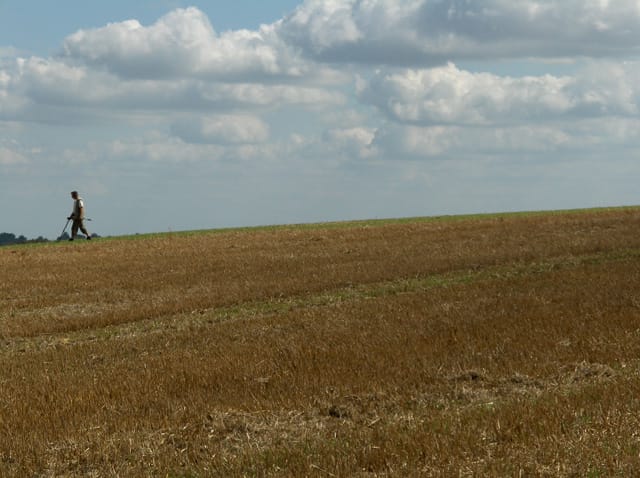
Andrew Smith — CC BY-SA 2.0, via Wikimedia Commons
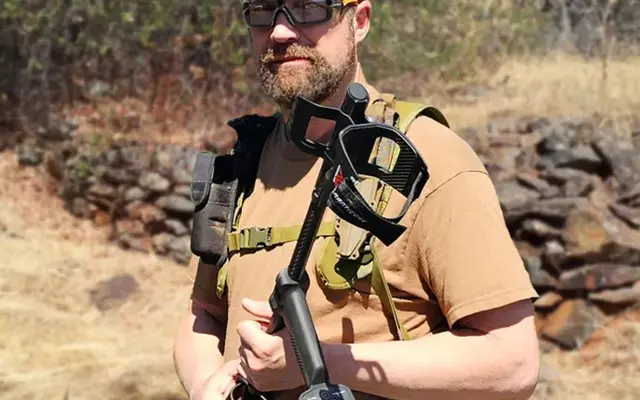
According to the Minelab blog, an American hobbyist discovered how much history lies hidden in the garden of his family home. The account is written in the first person and begins about two years ago. The author had bought his first metal detector, a Minelab VANQUISH 340, because he wanted to try a new hobby together with his grandson.
The starting point is a place the author believed he knew well. His parents built the house about forty years ago. Before that, the land was part of a farm on the outskirts of a small town, founded in the early 1800s. This agricultural past was known only in broad outline, and the first searches with the coil changed the way he looked at that space.
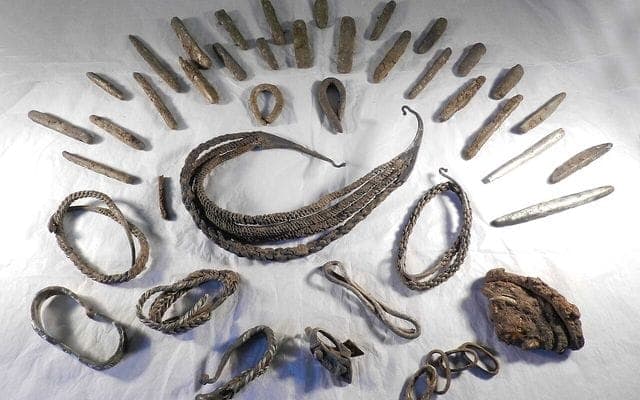
Among the finds mentioned in the account are an old wagon hitch, which the author calls a wagon hitch, and several horseshoes. These objects are consistent with the farm use of the land and with a past built around working animals and horse-drawn vehicles. The smaller items have been placed in a glass display case, known as a shadowbox, so they can be exhibited and shown. The source does not provide dates, recovery depths, or other technical details about the individual pieces.
The most interesting aspect is the author's attitude. He openly says he does not know the full history of the objects he has found, and that this, in his view, is exactly what makes them interesting. Each find becomes a reason to learn more about the people who used that land before his family. In this view, metal detecting is not reduced to treasure hunting. It is a starting point for researching a place and its history.
Anyone who practices this hobby knows that this is a common path. An isolated find says little, but it becomes more telling when compared with historical maps, family memories, and information about how the land was used in the past. The author of the account does not go into these details, but his choice to document and preserve the smaller pieces points in that direction.
The account also shows how much a beginner can learn without going far from home. A family garden is a familiar, convenient environment, close at hand for getting comfortable with the machine, the signals it returns, and the work of recovery. For the author, the biggest surprise was discovering that the adventure could begin so close to home.
For readers in Italy, it is worth noting that the regulatory framework in Italy governing research and cultural heritage differs from the American one the account comes from. Before going out with a metal detector, even on your own land, it is advisable to check the rules in force and the obligations that apply if a find of historical interest is made.
The original text closes with a reference to the VANQUISH 340, the model used, for readers who want to learn more about its features. What remains above all is the image of a beginner who, with an entry-level detector and a bit of curiosity, turned a family yard into a small open-air archive.
ADV
The AI assistant for metal detecting
Custom programs, restricted-area checks, ground recognition and much more.Try it free →Get the app