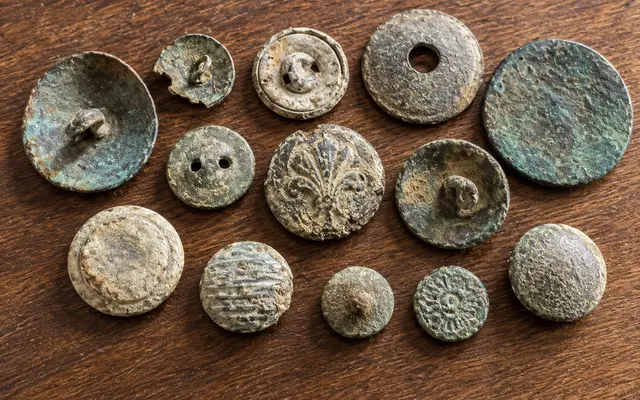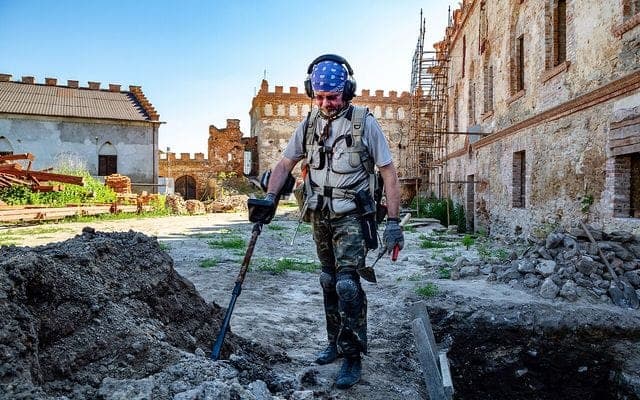
Anyone who practices metal detecting knows that objects are lost mostly where people stop: to rest, water their animals, cross a ford or set up camp. This raises a useful question for historical research on the territory: how far could a traveler go before having to stop? The answer is not straightforward, because the distance that could be covered in a day was never a fixed figure. The reasoning here draws on a point made by the Focus Speed website, which invites us to think in terms of limits rather than speeds, as we are used to doing today.
The first step is to change the question. Instead of asking "how far could a traveler go?", it is better to ask who was traveling, with what means, under what conditions and for what purpose. A courier, a family with children and household goods, a military column with baggage carts, and a hunter or explorer did not move in the same way. Each had its own unavoidable stopping point, and that point is what matters to those searching in the field.
A man on foot, in good health, with little baggage and on a decent surface, could cover a respectable distance in a day. But a few variables are enough to change the picture: a heavy backpack, a well-trodden road or a cross-country route, the weather, the company of slower people, the urgency of the journey. The sources also remind us that physical limits were the same for everyone: heat drains energy, mud wears it down, slopes shorten the route, and darkness, as a rule, ends the walk.
The horse changes the calculations, but less than one might think. The idea of speed associated with the animal is partly misleading, because the horse often had to be in good condition the following day too, and could not be used as if the journey ended at nightfall. Water, fodder, temperature, terrain and the animal's condition mattered as much as the rider's determination. An exhausted horse in the wrong place could turn a manageable journey into a serious problem.
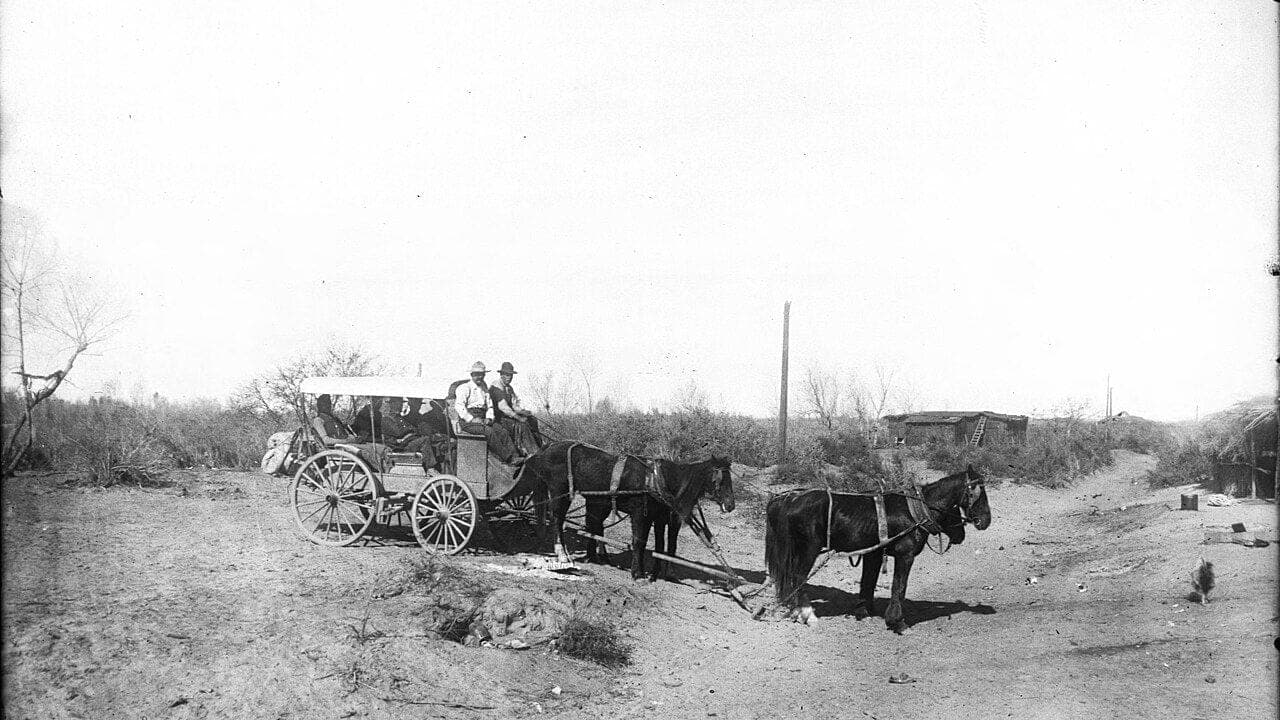
Carts bring further constraints, often underestimated. A loaded cart was not just slow, it was also vulnerable: wheels and axles could give way, the animals required constant attention, and deep sand, mud, riverbanks, uneven slopes and narrow passages slowed progress. With oxen the pace dropped further: powerful and reliable, but not fast. A family with tools, food, children and perhaps livestock could not travel like a horseman with a blanket and a mission.
Military movements are perhaps the most misunderstood, because what was possible under extreme pressure is confused with what was sustainable in normal conditions. A forced march was remembered precisely because it was exceptional: men gave out, animals weakened, carts fell behind and supplies came under strain. A column that had to keep supply wagons, ammunition and rations together moved at the pace of its slowest and most important element, not its fastest. A courier or a reconnaissance patrol, on the other hand, followed entirely different logic.
For this reason, travel data found in publications should be used as rough guidelines, not as magic numbers. They are useful guides, not absolute values, and the source itself warns against treating them as such. The text on which this article is based, in the part available, breaks off just as it is about to introduce some general reference intervals, so they are not cited here. Anyone wishing to go deeper would do well to consult the original publication directly and compare several sources.
How do we put all this into practice? A reasonable method is to build a scenario for each type of plausible traveler in a given area and period, estimate a cautious daily stretch based on means, load and terrain, and then look on historical maps and on the ground for the points where that stretch would naturally end: an area with water and pasture, a crossing, a sheltered spot. These are places where someone was more likely to have stopped, rested, lost or abandoned something. This is an application of reasoning, not a proven fact. It must be verified through archival research and, of course, with the required permits and in compliance with the rules governing searches in one's own country.
The advantage of this approach is that it shifts attention from "where I have always searched" to "where people had to stop". A forgotten site often shows nothing striking on the surface: what reveals it is the logic of the journey, made of exertion, animals, loads and limits. Before switching on the detector, it is worth reasoning like a historical detective: understanding who passed that way and why they had to stop.