Sometimes the ground tells a different story from the one archaeologists are looking for. That is what happened at Mezőkeresztes, in northeastern Hungary, where a decade-long search for one of the great battlefields of European military history has uncovered a hoard about 3,000 years old. Stilearte reports this, citing a statement from the Hungarian National Museum. Researchers were looking for traces of the clash of October 1596 between the Ottoman army and Habsburg forces, part of the Fifteen Years' War. Instead, a Late Bronze Age deposit came to light. It consists of a large metal vessel and three spiral ornaments, probably bracelets meant to be worn on the arms.
The announcement was made on November 4, 2026, by the Hungarian National Museum, in a statement dedicated to the micro-excavation of the deposit. The site lies in the Borsod-Abaúj-Zemplén region, southwest of Miskolc and northeast of Budapest, in the northern part of the Great Hungarian Plain. The project is led by the Hungarian National Museum and the National Archaeological Institute. It covers an area of more than 100 square kilometers and has been ongoing for about ten years. Its initial goal is the topographical and archaeological reconstruction of the Battle of Mezőkeresztes, fought between October 22 and 26, 1596.
That clash pitted the Ottoman forces led by Sultan Mehmed III against a Christian coalition linked to the Habsburgs and Transylvania. The battle, known in Turkish historiography as Haçova, ended in an Ottoman victory. It was one of the most significant episodes of the war fought between 1593 and 1606. Archaeological fieldwork aims to give material substance to an event known mainly from historical sources. It therefore looks for metal finds, personal belongings, ammunition, military equipment, and other evidence of the armies' presence.
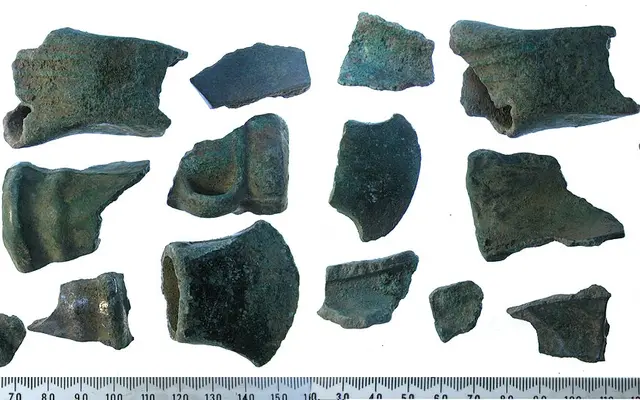
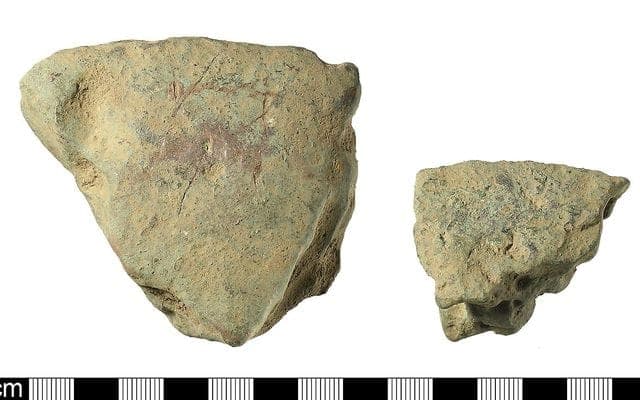
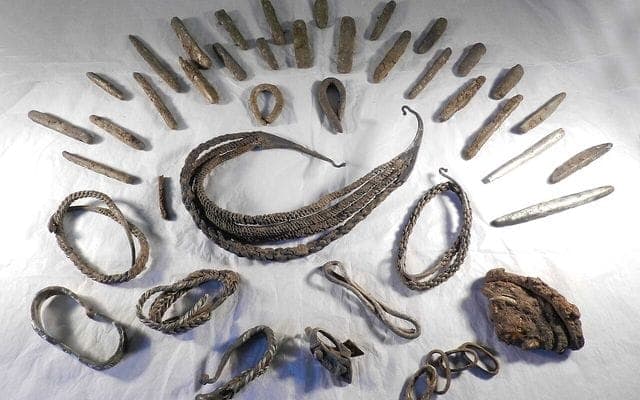
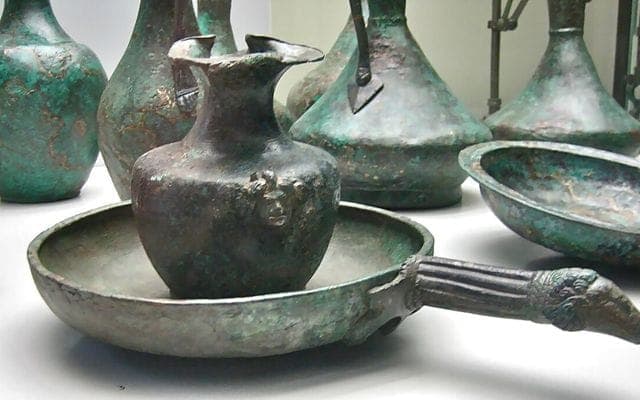
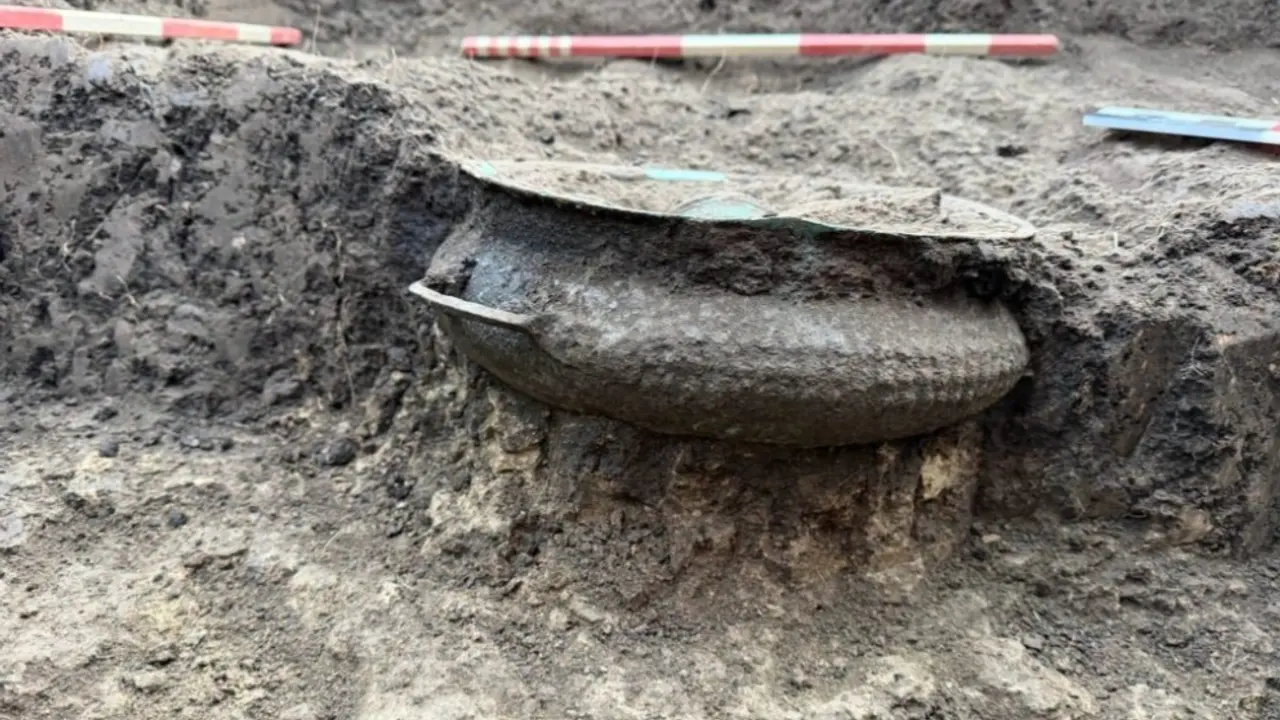
During one of these campaigns, Zoltán Vágó, a volunteer with the community archaeology programme, used a metal detector to pick up a signal linked to a concentration of metal underground. The investigation led to a large bronze vessel, accompanied by two spiral ornaments that were visible during recovery. The type of objects and their decoration made it possible to recognize an origin far older than the sixteenth-century battle. The complex has been attributed to the Late Bronze Age, between the 13th and 11th centuries BC. The objects were therefore deposited about 2,500 years before the clash between Ottomans and Habsburgs.
The most interesting aspect concerns the recovery method. Archaeologists chose to transfer the entire block of soil to the laboratory, preserving the original relationship between the objects and the sediment surrounding them. This decision allowed the investigation to continue through micro-excavation. A third artifact, which had remained hidden during fieldwork, also emerged in the laboratory. According to Stilearte, the presence of metal ornaments inside the vessel suggests an organized deposit. The container would not be a simple wrapping, but part of the deposit's composition itself. The source text available to us breaks off before explaining why the set was buried at that particular spot. For this reason, it is not possible at present to offer an interpretation of the deposition site or of the context surrounding it. Nonetheless, it remains a useful example of collaboration between archaeologists and volunteers, and of how a metal detector signal can be documented through a recorded excavation.