A student-led excavation at a Roman frontier site in north-eastern England has uncovered several objects linked to Roman elites and military service. The report, carried by Archaeology Magazine (AIA), is based on a press release issued by Newcastle University. The site is given as Redesdale.
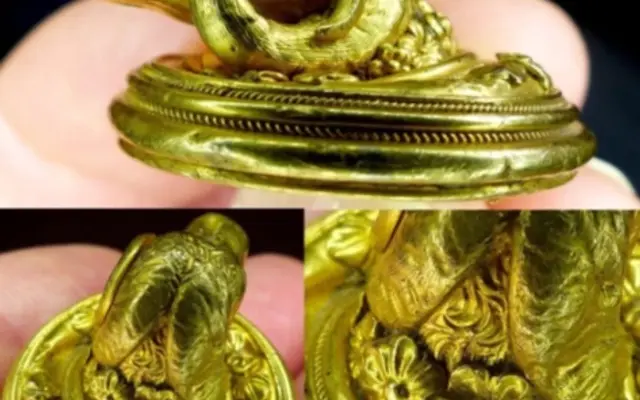
The find attracting the most attention is a fragment of gold chain almost three inches long, or about seven centimetres. According to reports, it is made of individual links that were pinched into a figure-of-eight shape, then bent and finally interlinked. This technique points to a high-quality artefact.
The students also recovered a small lead sheet bearing a Latin inscription. The sources do not allow its function to be established with certainty. It may have been used as a personal message, as a curse tablet (defixio), or as a commercial seal. These three hypotheses remain open, pending any further in-depth studies.
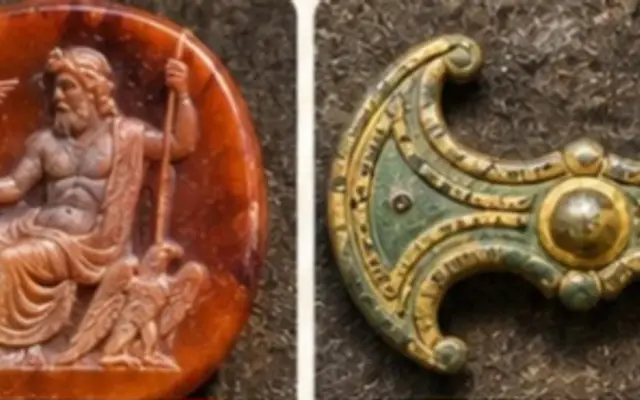
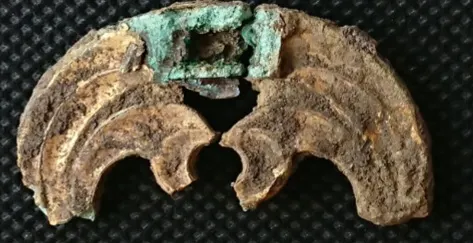
Among the finds is also a gilded bronze object in the shape of a crescent. For this type of object, it is thought to have been applied to a military belt, a horse harness or a sword scabbard. The image accompanying the report shows a Roman cavalry pendant, known as a dangler, but the article does not specify which find the photograph refers to.
Another notable piece is a carved carnelian intaglio. It depicts the god Jupiter holding a sceptre, a figure of Victory and an eagle. According to the source, it is the fourth intaglio found so far at this site, a detail that helps to define the social profile of those who visited or lived at the settlement.
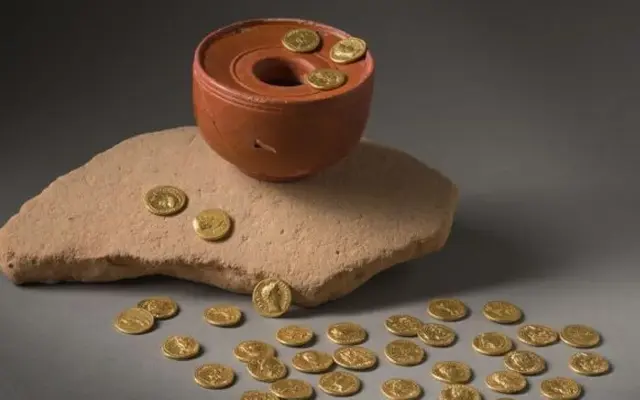
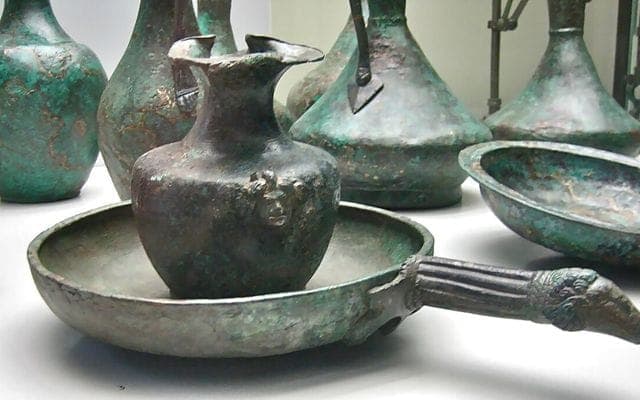
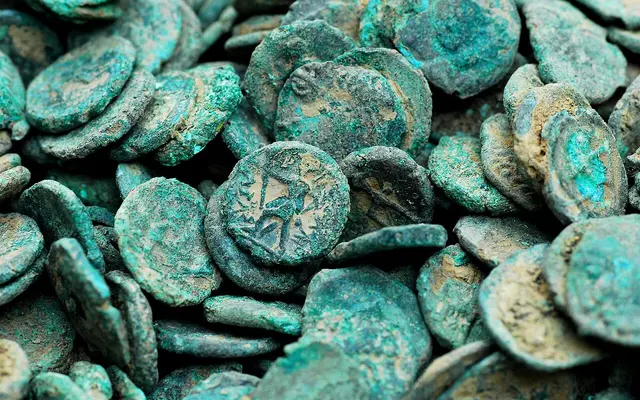
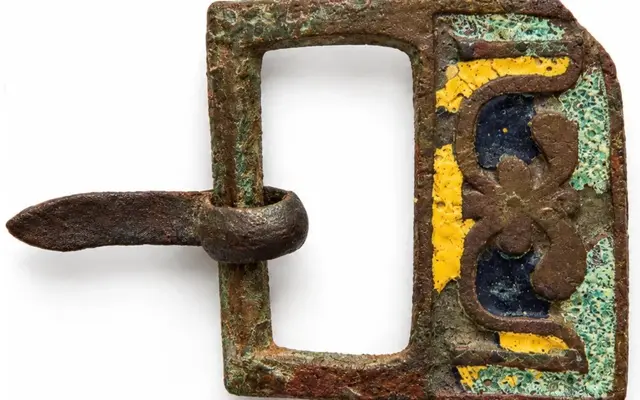
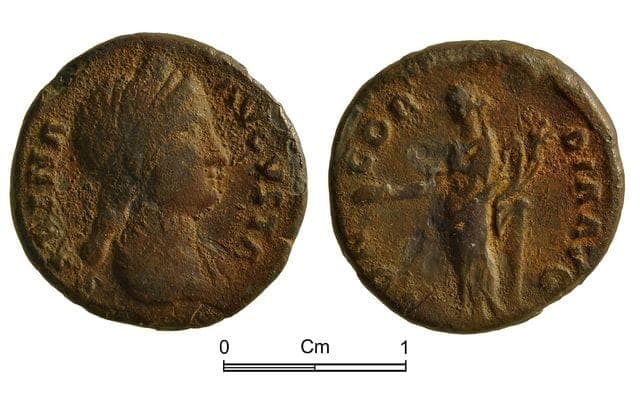
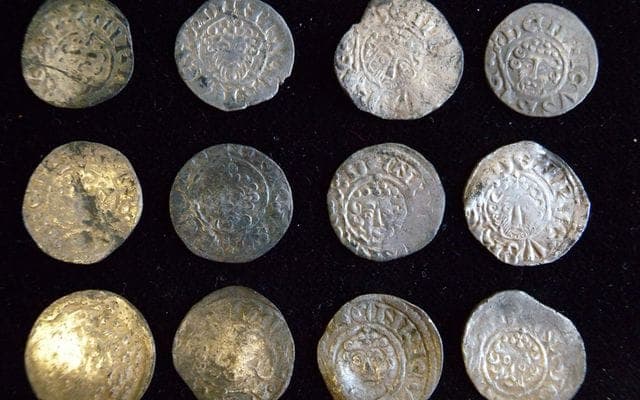
The recovered material also includes coins, spearheads, clothing accessories and a bowl bearing a partial inscription of the name “Martin”. This is probably “Martinus”, a Latin name that points to real people behind everyday objects.
For metal detectorists, the case clearly shows the value of context. Objects such as spearheads, coins and metal accessories are types that often turn up in field research too. Here, however, the material was recovered in a stratigraphic excavation led by students under university supervision. This makes it possible to link each piece to its exact position and interpret it more accurately.
The available sources are brief and give no details on precise dating, the length of the campaign or future analyses. For this reason, the finds cannot be assigned to a specific period within Britannia's long Roman occupation. The university's full press release, or future scientific publications, will be needed to clarify these aspects.
In any case, the combination of gold, gilded bronze, inscribed lead and carved gemstones suggests a place frequented by people of rank connected with the army. Redesdale thus confirms its interest for understanding life along the northern frontier of the Roman Empire.