A discovery described as "of a lifetime" for a metal detecting enthusiast: according to Live Science, an Englishman used his detector to find an exceptionally well-preserved Roman tomb, rich in artefacts dating to around 200 AD. The site lies in a field in Kelshall, a small village between London and Cambridge.
The protagonist is Phil Kirk. In the same field he had previously recovered a Roman coin and suspected that other finds lay nearby, as explained by Keith Fitzpatrick-Matthews, archaeology and outreach officer at North Hertfordshire District Council.
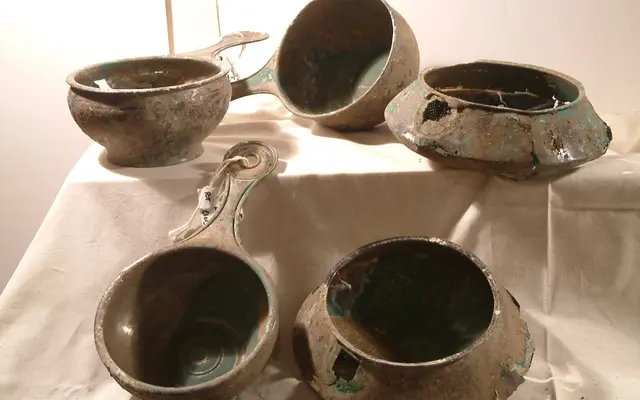
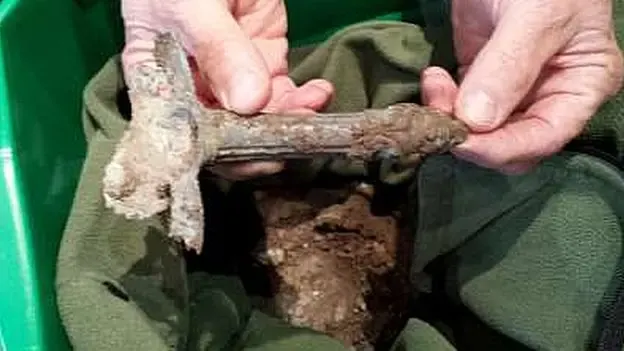
In October 2014 the right signal led him to a bronze jug about 25 centimetres tall. He soon recovered a bronze patera, the shallow dish used to pour libations of wine or blood, and two more jugs. Kirk then made the decisive choice: he alerted local experts instead of carrying on alone.
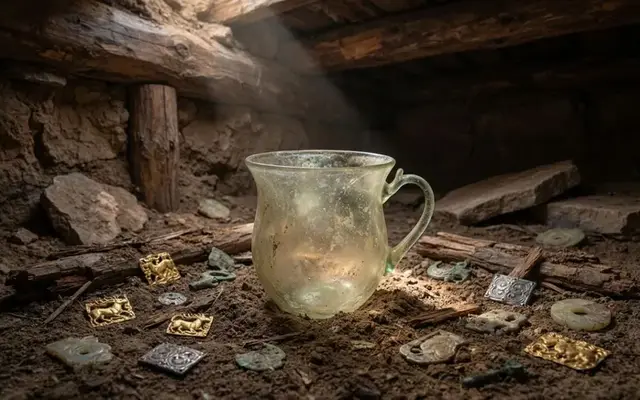
Archaeologists returned to the site several times, between October and November, and found further objects: a bronze pin, an iron lamp, and glass bottles of different shapes (octagonal, hexagonal, rectangular and square). Only when they saw that the large hexagonal bottle was full of cremated bones did they realise they were looking at a burial. Fitzpatrick-Matthews noted that this detail explained everything: it was a high-status burial.
The tomb measures about 1.9 by 1.6 metres. The finds also include iron hobnails once fixed to the soles of leather sandals; the leather has been lost and only the nails remain. According to the archaeologist, the grave goods included footwear because the soul's journey to the River Styx, where the crossing took place, was made on foot, and those who could afford it were buried in their finest sandals.
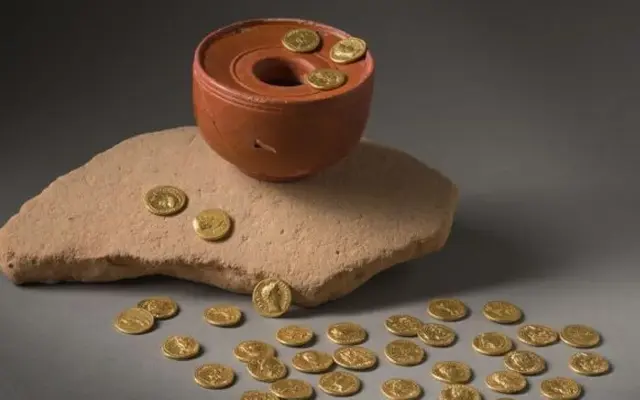
Mosaic glass dishes, possibly from Egypt or western Europe, also emerged, along with a small piece of lava and the remains of a wooden box containing two glass cups. Inside was a silver denarius bearing the effigy of Emperor Trajan (AD 98–117), which probably slowed the decay of the wood.
Another coin helped date the burial. It is a worn bronze, found inside the cinerary urn, issued by Marcus Aurelius in the 170s AD and probably meant to pay Charon, the ferryman of the dead. According to Fitzpatrick-Matthews, coins of this type are not normally found in Roman graves, and the wear indicates that at the time of deposition it was already 20–30 years old, hence the date of around 200. The mosaic glass dishes also belong to the same period.
The investigations also revealed traces of a nearby building, probably a shrine or temple linked to a villa. The tomb therefore most likely belonged to a wealthy individual within a prominent residential context.
For the metal detecting community, the case is a concrete example of good practice. An unusual signal, a limited initial recovery and prompt reporting to specialists made it possible to excavate the context scientifically, preserving the relationships between the objects. Without this step, information such as the function of the bottle with the bones, the presence of the coin for Charon and the overall dating would have been lost.