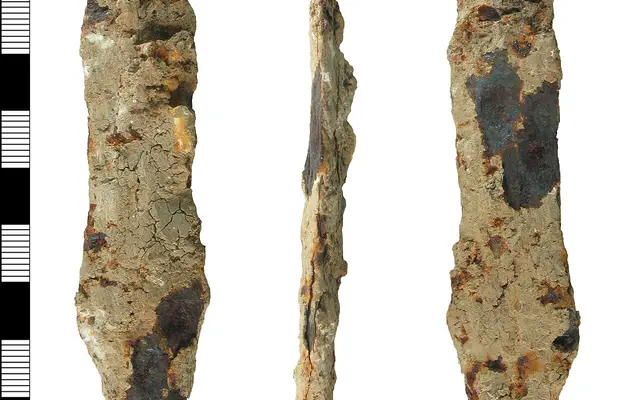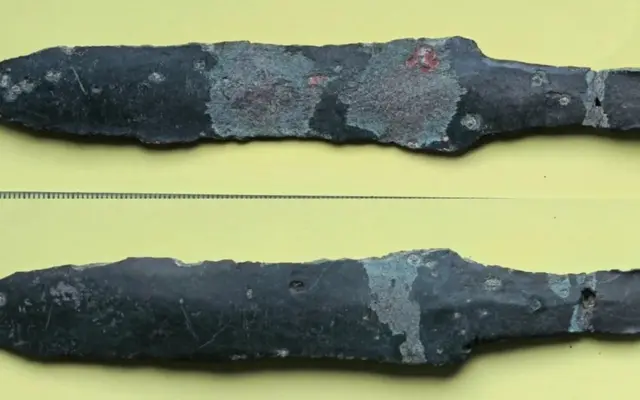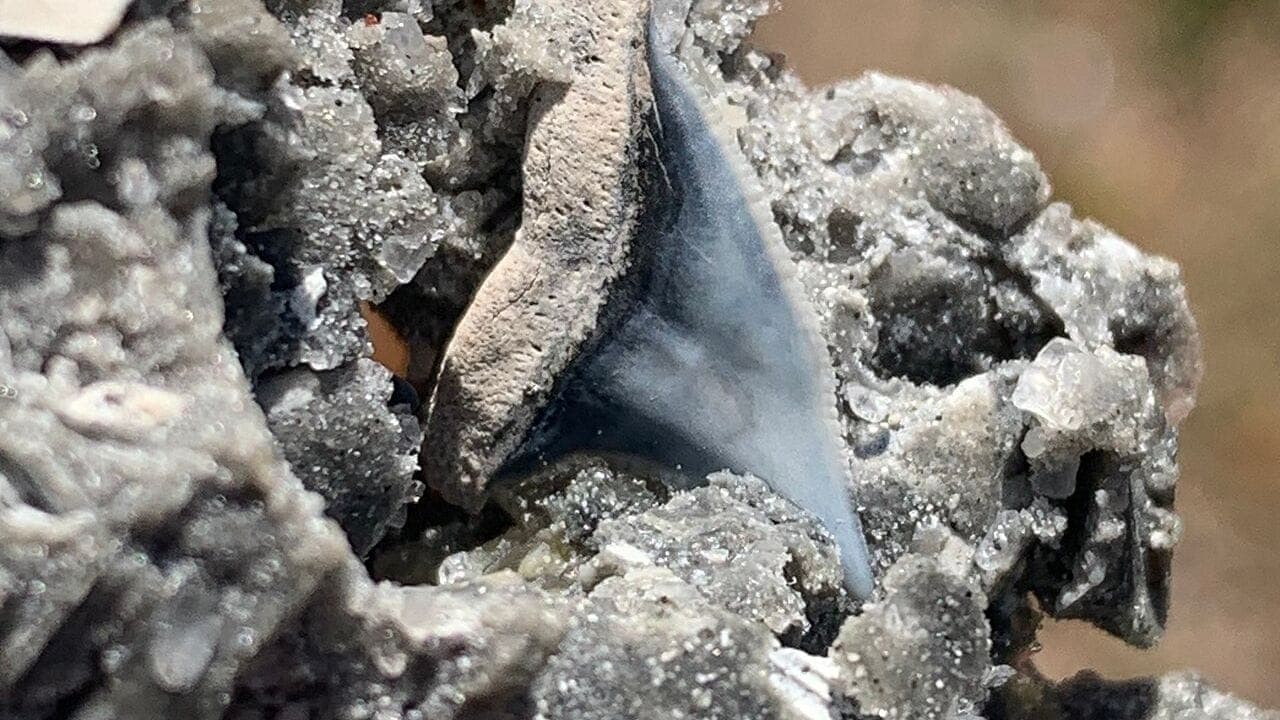
It often happens that the search for one object leads to the discovery of another. This is what happened to a university student in Virginia who is taking a biology course. According to Live Science, the young man was looking for shark teeth along the state's coast when he came across a stone spear point of Native American origin.
As reported by the source, the story is brief: a student, a shark tooth hunt on the Virginia coast, and the discovery of a stone artifact. The headline Live Science used also quotes the exclamation attributed to the student, “This is so crazy!”, and describes the find as a rare point. The material available to us contains no other verifiable details, such as the age of the object, the exact location, the type of stone, or the culture to which it would be attributed. For this reason, we do not report them.
The case is nonetheless instructive for anyone who does fieldwork. Fossil hunting along coasts, beaches, and riverbanks and the search for ancient artifacts often share the same setting: sediments reworked by water, materials that surface after storms, and objects from different periods that end up a few meters from one another. Someone who walks with their eyes on the ground in search of fossils develops a trained eye for unusual shapes and reflections, and this skill can prove valuable for spotting an artifact as well.
A stone spear point is the product of knapping, a process in which the material is shaped by removing successive flakes. Its form, its dimensions, and the way it was flaked are the elements archaeologists normally use to place an object of this type in context. For this reason, the exact location of the find and the conditions in which the object was found have a scientific value that can exceed that of the artifact on its own.
For those who use metal detectors, the principle is the same, although here the only tool was the eye. When you find something that appears to be old, it is best to stop, document the spot with photographs and coordinates, and avoid cleaning or handling the object more than necessary. Rules on land ownership, permits, and reporting obligations vary from country to country and, in the United States, also depend on the type of area, so they should be checked before heading out. In Italy, it is worth recalling, archaeological finds are subject to specific regulations and must be reported to the competent authorities.
What will happen to the artifact remains to be seen, whether it will be studied or its identification further investigated. On this point, the source consulted provides no information, and we do not want to speculate. We will follow the story and update the article if verifiable details emerge. What can be said, based on the information available, is that a trip intended for fossil hunting turned into a direct encounter with the history of the Native peoples of Virginia, confirming how much the coastal landscape can reveal traces of very different eras.