Those who go out with a metal detector hope for a hammered coin, a Roman brooch or a piece of gold. Now and then, however, a signal leads to something completely different. According to LP Metal Detecting, in an article published for Halloween, seven unusual finds have been documented in Britain, including a Roman curse inscribed on lead, a gold ring with a skull and a bottle containing hair and a human tooth, as well as ancient burials that had lain underground for more than a thousand years. Here we focus on the three cases described in the portion of text available to us.
The first dates back to 2017. A detectorist searching outside the protected perimeter of a Roman villa at Lidgate, in Suffolk, recovered a small strip of lead about 90 mm wide. The sheet had been deliberately inscribed and then folded twice. After examination by specialists, it emerged that it was not simple metal scrap: it was a curse tablet, or defixio.
The text seems to refer to rings that were lost or stolen, with the author apparently calling on supernatural help to recover them. One phrase quoted by the source reads: “The rings that have been lost, whether woman or man, whether free or slave…” The writing is also unusual, as some letters were deliberately reversed or turned upside down, a feature sometimes found in magical inscriptions. In Roman Britain these tablets could contain highly personal requests concerning theft, relationships, disputes and revenge. The object was later donated to the Suffolk County Council Archaeological Service.
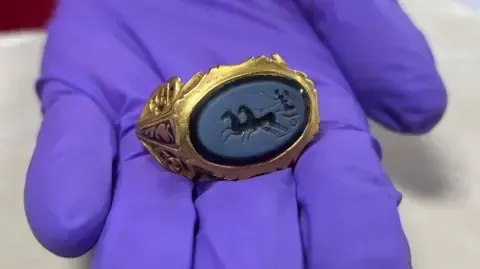
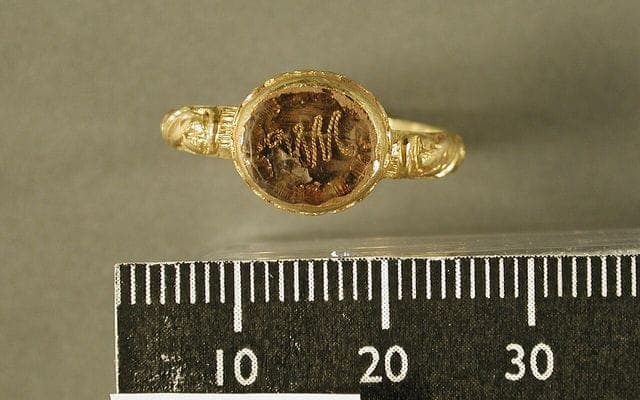
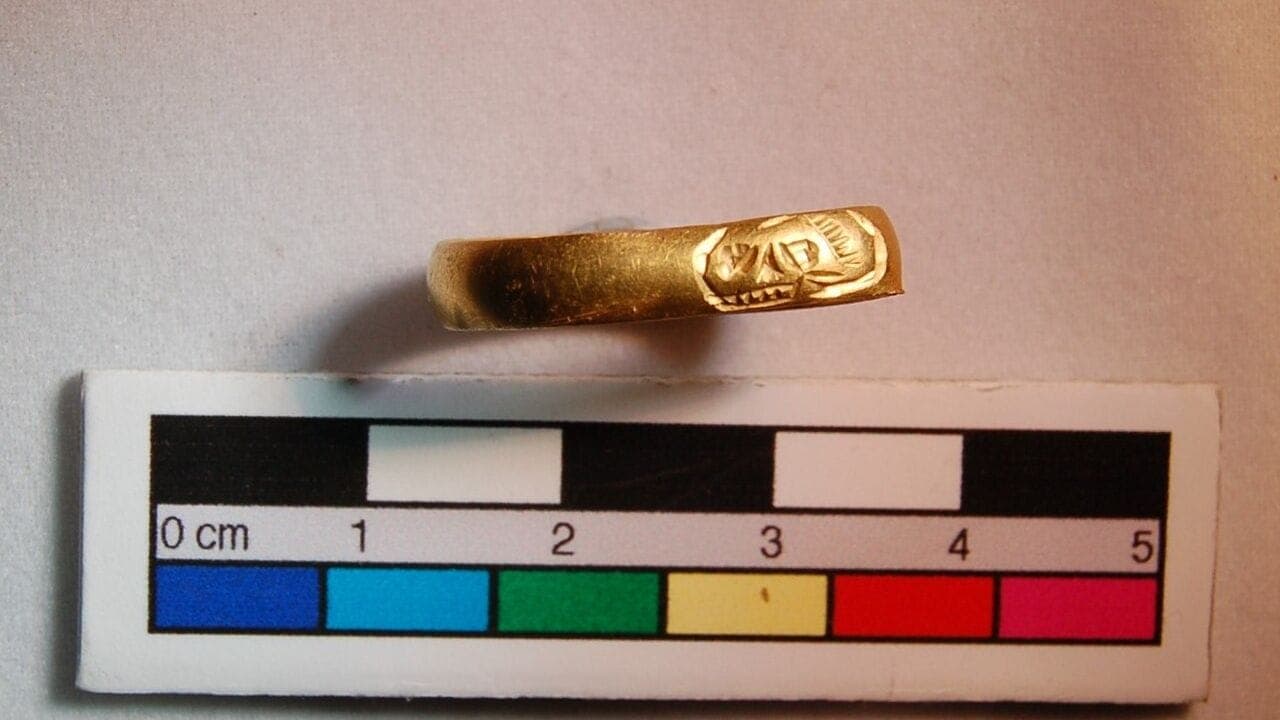
The second find comes from Wales. Detectorist David Balfour discovered a gold finger ring at Carreghofa, in Powys. Engraved on the flat bezel is a human skull, once highlighted by traces of white enamel. The accompanying inscription translates roughly as “remember that you must die”. The ring is dated to around AD 1550–1650 and is an example of memento mori jewellery.
At that time death was far more present in everyday life than it is today, and memento mori images reminded those who wore them of the inevitability of death and the brevity of earthly life. Skulls, skeletons, hourglasses and other symbols of mortality appeared on jewellery, monuments and works of art. For those who wore it at the time, the message was therefore far more serious than an object that today seems designed for Halloween would suggest. The ring has been declared Treasure, and the discovery was documented by Amgueddfa Cymru – Museum Wales.
The third case dates to 2021. Chris Langston was searching in an isolated wood in Shropshire when he unearthed a glass bottle. It reportedly dates from between 1860 and 1900 and has been described by the media as a possible “witch bottle”. The idea may seem to come from a horror film, but there is concrete archaeological evidence of bottles deliberately prepared in connection with folk magic and protection.
MOLA has studied historical examples containing combinations of pins, nails, thorns, urine and other personal material. They are often hidden beneath floors, near doorways and around hearths, but some specimens have also been recovered from ditches, riverbanks and archaeological sites. Interpreting each individual case is not always straightforward, and archaeologists remain cautious before labelling every unusual container a “witch bottle”. A bottle with hair and a human tooth, found in an isolated wood, is nonetheless an out-of-the-ordinary find.
The source goes on to describe other cases, including a discovery from August 2007, but the text available to us breaks off at that point. For metal detectorists, these stories show that the strangest signal can conceal an object of great historical interest. They also highlight how important it is to report finds: in these cases, the contribution of the finders made it possible to study and document the objects.