A reversal of what has been taken for granted for generations comes from England. According to Archaeology Magazine, citing a statement from Bournemouth University, Verica, an Iron Age British ruler, may have been a woman rather than a man, as has always been believed.
Verica ruled the Celtic tribe of the Atrebates in the 1st century AD and is considered a central figure in the story of the Roman invasion of Britain. According to the source, in 40 AD she was ousted from power and took refuge with the emperor Claudius, whom she persuaded to invade the island three years later.
The study was led by Miles Russell, an archaeologist at Bournemouth University. According to the researcher, the confusion over Verica's gender stems largely from the patriarchal outlook of 19th-century classical scholars, who assumed that a tribal leader must be a man.
The first argument concerns the name. Russell notes that, like those of other women in power in Britain at the time, such as Boudica and Cartimandua, the name Verica ends in an “a”, an element he believes should be read as feminine.
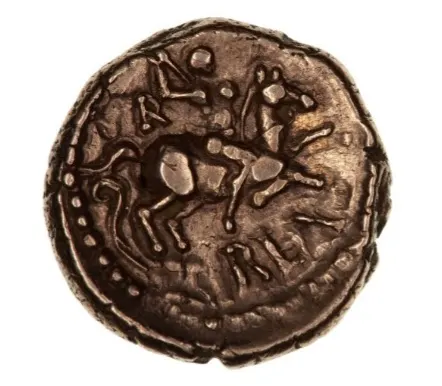
The second argument concerns titulature. Scholars have often read the Latin term “rex”, meaning “king”, which appears on Verica's coins, as evidence of masculinity. According to Russell, however, the title was not tied to a specific gender: it was even used by Cleopatra.
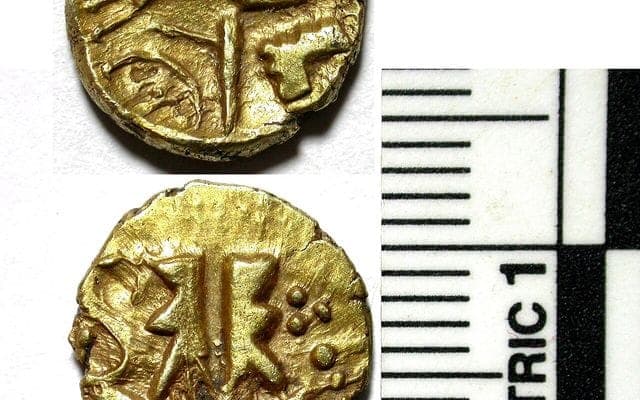
The third element, perhaps the most striking, is the iconography of the coins. Gold coins attributed to Verica show a naked warrior on horseback, armed with a spear, accompanied by the inscriptions VIR, an abbreviation of Verica, and REX. Russell highlights the contrast with other Iron Age British rulers who minted coins: “While the other British rulers who produced coins depict clearly male warriors, Verica is shown as a slender, feminine figure, bare-breasted, on horseback.”
The scholar's conclusion follows: “We should take the archaeological evidence for what it is and remember Verica as a queen, one of the earliest and most important women to hold power in Britain.”
For those who practise metal detecting and historical research, the case shows how much a coin find can influence our reconstruction of the past. A coin is not just a value or a type to catalogue: its legend, iconography and context can change the interpretation of a historical figure. It should be noted that this is a thesis put forward by a single researcher and presented by the university, and the sources consulted do not report assessments from other specialists.
For this reason, the topic remains open to scientific debate. The sources provide no details on the publication of the study or on any new finds: the argument rests on a re-reading of known evidence, namely the name, the title “rex” and the images struck on the coins.
If Russell's reading is confirmed, Verica would take her place alongside Boudica and Cartimandua among the female figures of pre-Roman Britain, in a period when, according to the researcher, the role of women in power has long been underestimated by historiography.