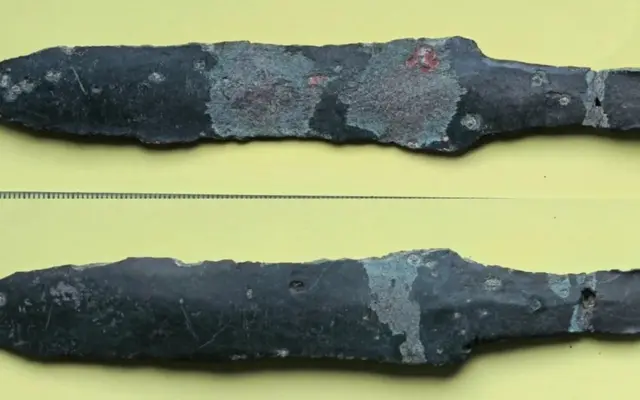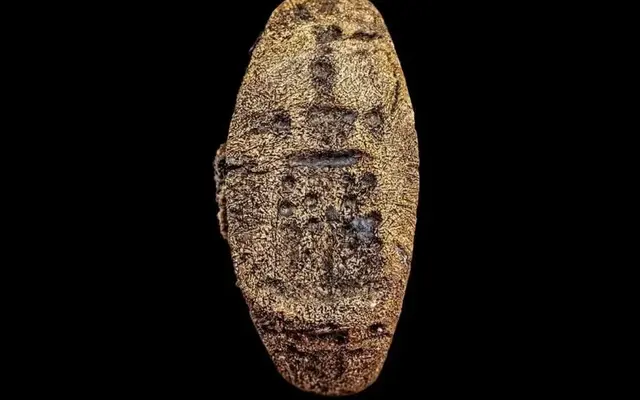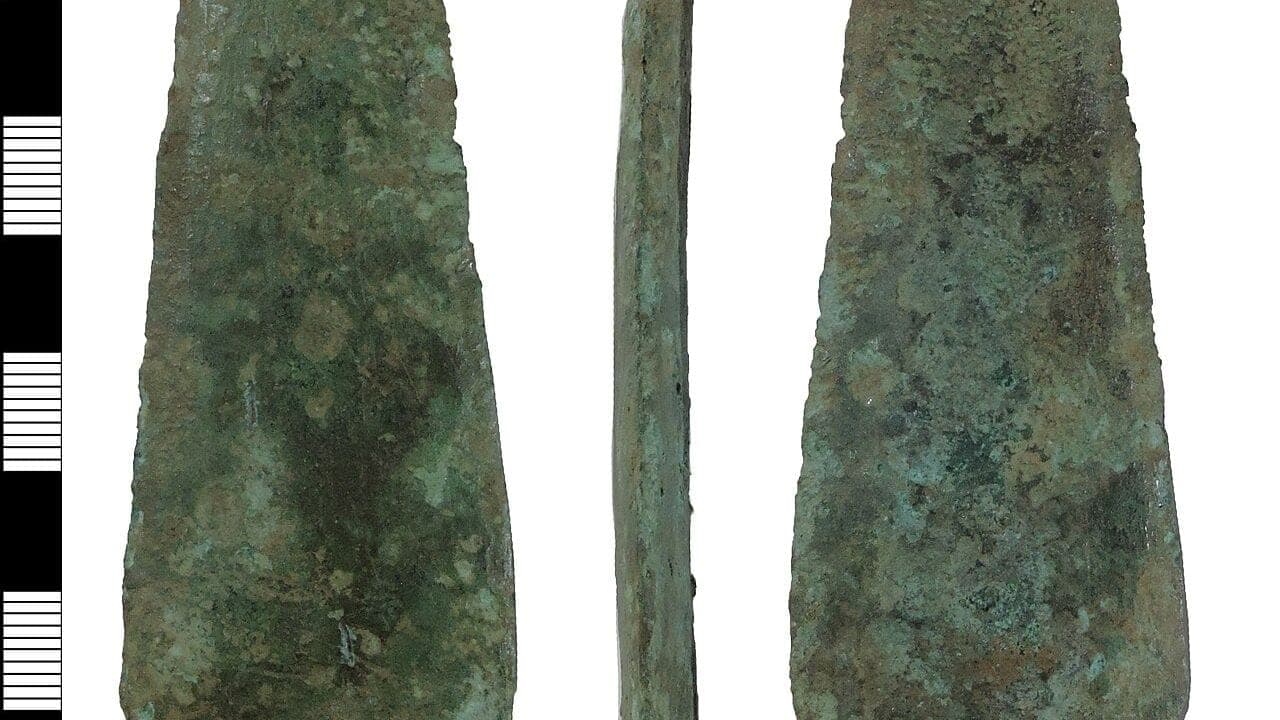
A metal detector enthusiast has found a copper dagger more than 4,000 years old in a forest near the village of Korzenica, in southeastern Poland. According to Live Science, which collected statements from the archaeologist who analyzed the find, the weapon may have belonged to a warrior elite. The find was studied by Marcin Burghardt, an archaeologist at the Orsetti Tenement House Museum in Poland. Speaking to Live Science, Burghardt explained that the Korzenica dagger is the oldest metal dagger discovered so far in southeastern Poland. The only similar specimen found in the country dates back to the 1960s, so the discovery came as a great surprise. Very few Copper Age copper daggers have survived to the present day in Poland.
A team of specialists visited the recovery site to check the context. The outcome, however, offered no further clues: as Burghardt said, no additional finds or traces of archaeological structures emerged in the area. Without a context of deposition, it is impossible to link the weapon to a specific archaeological culture, and this is one of the main limitations of the study.
To date the object, archaeologists compared it with securely dated daggers of similar type from central Europe and the Ukrainian forest-steppe. Based on these comparisons, Burghardt wrote that the Korzenica dagger most likely dates to the second half of the 3rd millennium BC.
As for its owner, the scholar suggests he was a warrior of very high social rank. However, it is unlikely the weapon was used in battle. According to Burghardt, copper daggers were above all status symbols: the metal is rather soft, which made them poorly suited to actual combat. The find could provide valuable clues about how the use of metal began in southeastern Poland, a step that would later lead to the use of copper and bronze. As the archaeologist noted, the object dates to a period when copper items were still very rare in this area.
Scholars now intend to subject the dagger to metallurgical analyses, which could help determine its provenance and manufacturing methods. It is not ruled out that it was made outside the region. If it proved to come from central Europe or the Ukrainian forest-steppe, Burghardt said, it would indicate that ideas and goods reached southeastern Poland from those areas. The news was originally reported by Science in Poland, an initiative born from a collaboration between the Polish government and the media. For the metal detecting community, the Korzenica case is an example of how a single recovery, even one lacking stratigraphic context, can contribute to research. It remains essential, however, to report the find spot precisely and involve specialists, because archaeologists derive much of their information from the location and the surrounding environment.