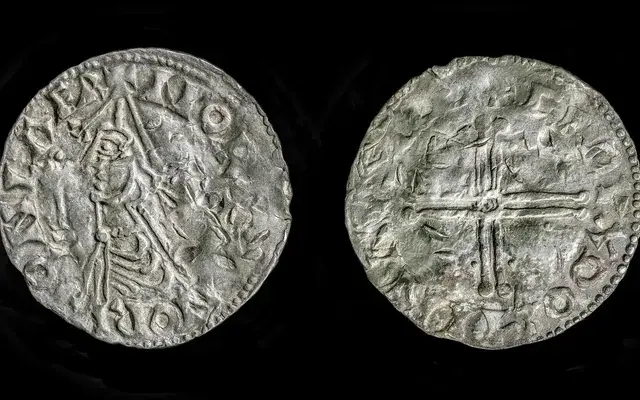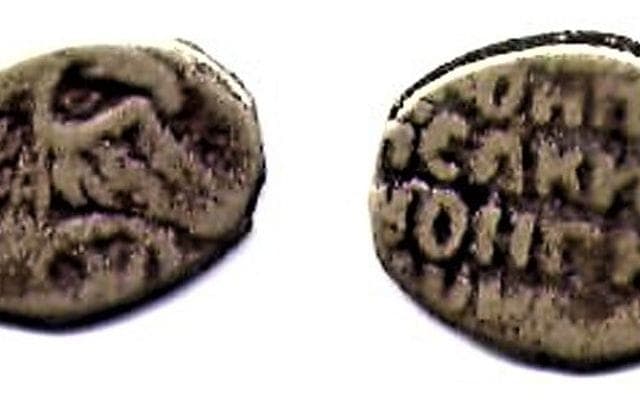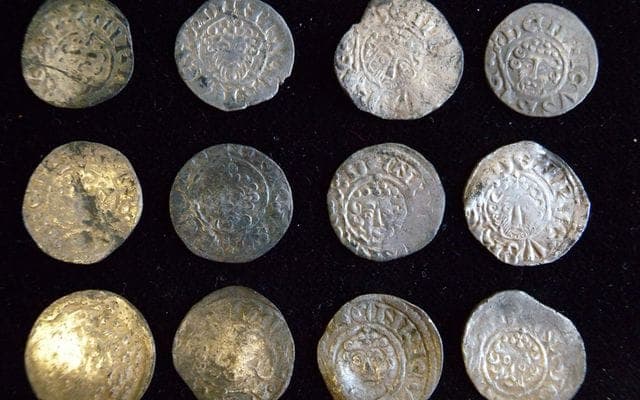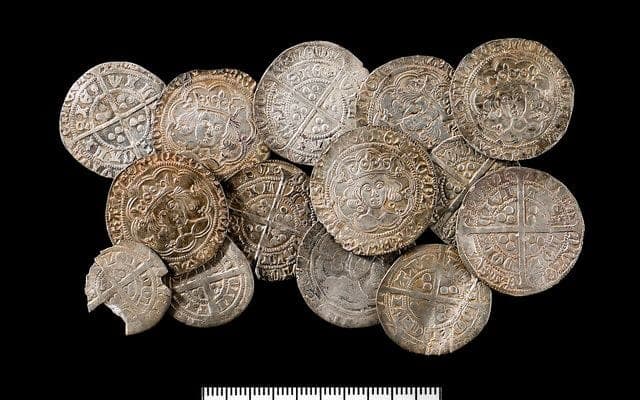
Setting something aside for hard times is not a modern idea. According to Live Science, in a review published on 30 December 2021 and written by Stephanie Pappas, 2021 was a particularly rich year for hoards: caches of coins and other valuables hidden for different reasons and never recovered. The treasures cited come from places far apart: a cornfield in Poland, a meadow in New England, a town in Denmark. They were left behind by monarchs, pirates, tribal chiefs and people who remained forever anonymous. Many of these discoveries, the outlet notes, are thanks to enthusiasts with metal detectors or simply a sharp eye, and some deposits date back about 1,500 years. Among the cases cited is what is described as the largest Anglo-Saxon hoard ever found.
The first case concerns Poland, at Słuszków. In 1935 the largest hoard of medieval coins ever found in the country was discovered in this village. At the end of 2020, a visitor returned to the site to learn more about that treasure and ended up locating a second one.
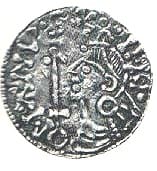
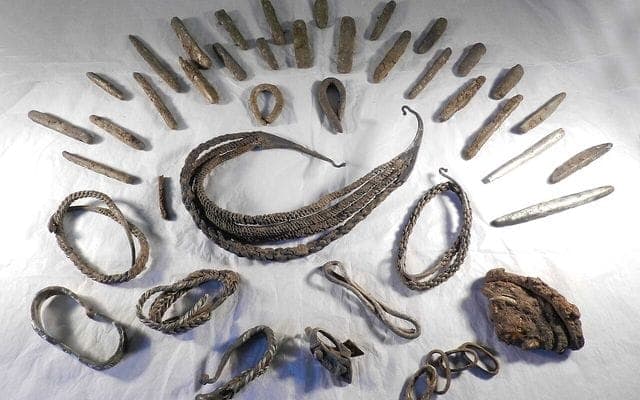
The research was led by Adam Kędzierski, an archaeologist at the Institute of Archaeology and Ethnology of the Polish Academy of Sciences. Following a tip from a local priest, Kędzierski went to a cornfield, where he found a ceramic vessel full of gold rings, silver ingots and silver coins. The complex dates to 1105 and, according to the hypotheses reported by the source, may have belonged to the first Polish royal dynasty. One of the gold rings bears an inscription in Cyrillic letters reading “Lord, help your servant Maria” and may have been worn by Dobroniega Maria, daughter of Vladimir the Great, Prince of Kiev, who married Casimir the Restorer.
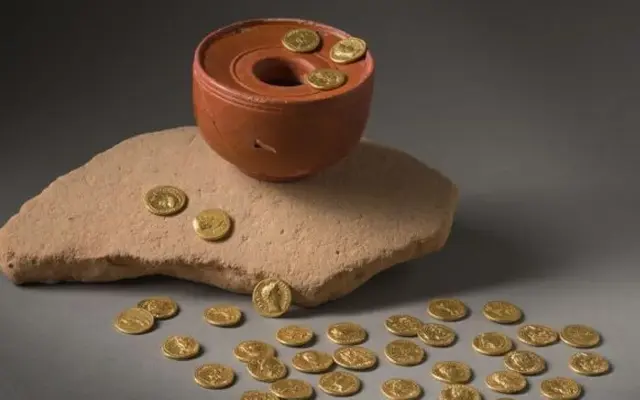
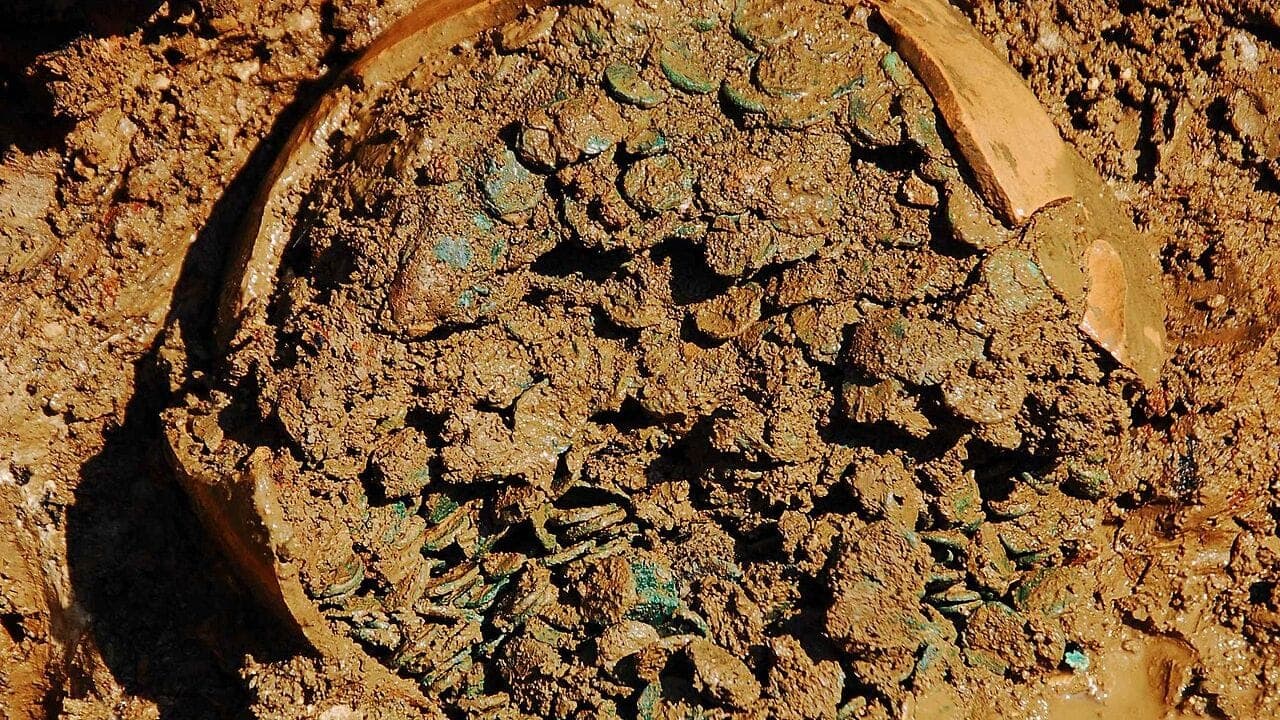
In Turkey, meanwhile, archaeologists recovered 651 silver coins kept in a jug. About 2,100 years ago, a high-ranking Roman soldier is believed to have knelt by a watercourse to bury them. It is not known who he was or why he left the treasure, but archaeologist Elif Özer told Live Science in February that the hoard was in excellent condition for its age. The coins depict different scenes. One shows an episode from the Aeneid, with the Trojan hero Aeneas carrying his family to safety from burning Troy. Others bear the images of various Roman emperors, including Julius Caesar.
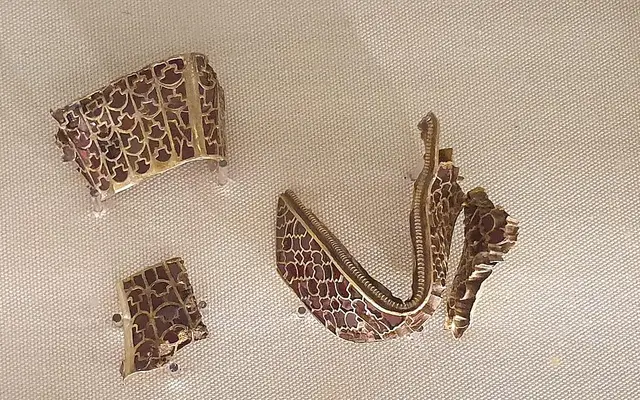
The roundup also covers a funerary context. In Bohemia, in today's Czech Republic, archaeologists described in March a 5th-century tomb, about 1,600 years old, containing the remains of a middle-aged woman buried with gold and precious stones. Several burials had been identified in the area, but all had been looted except this one. Researchers found bones, glass beads and a gold headdress set with semi-precious stones. Four buckles, also decorated with semi-precious stones, remained on the skeleton, the remnants of the garments or funerary veils in which the woman had been laid to rest.
Live Science also refers to other recent finds covered in dedicated articles: a metal detectorist in Germany who discovered a large Roman-era hoard dating to the time of Emperor Hadrian, a homeowner in Denmark who found in his garden what is described as the country's largest Viking-age silver deposit, and a metal detectorist in Finland who unearthed the country's biggest Viking hoard, with thousands of coins and jewels. The article also features a rare gold coin, the so-called leopard, minted in 1344. For metal detectorists, the picture that emerges is clear: many of the year's most important discoveries began with a tip-off, a targeted search or a check of the ground, and in the cases cited they involved archaeologists and institutions. When a hoard is found, the most sensible advice remains not to dig in an improvised way and to notify the competent authorities, because the context and position of the objects are information as valuable as the metal itself.