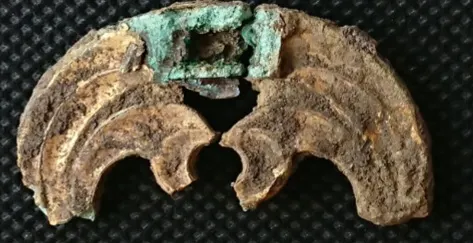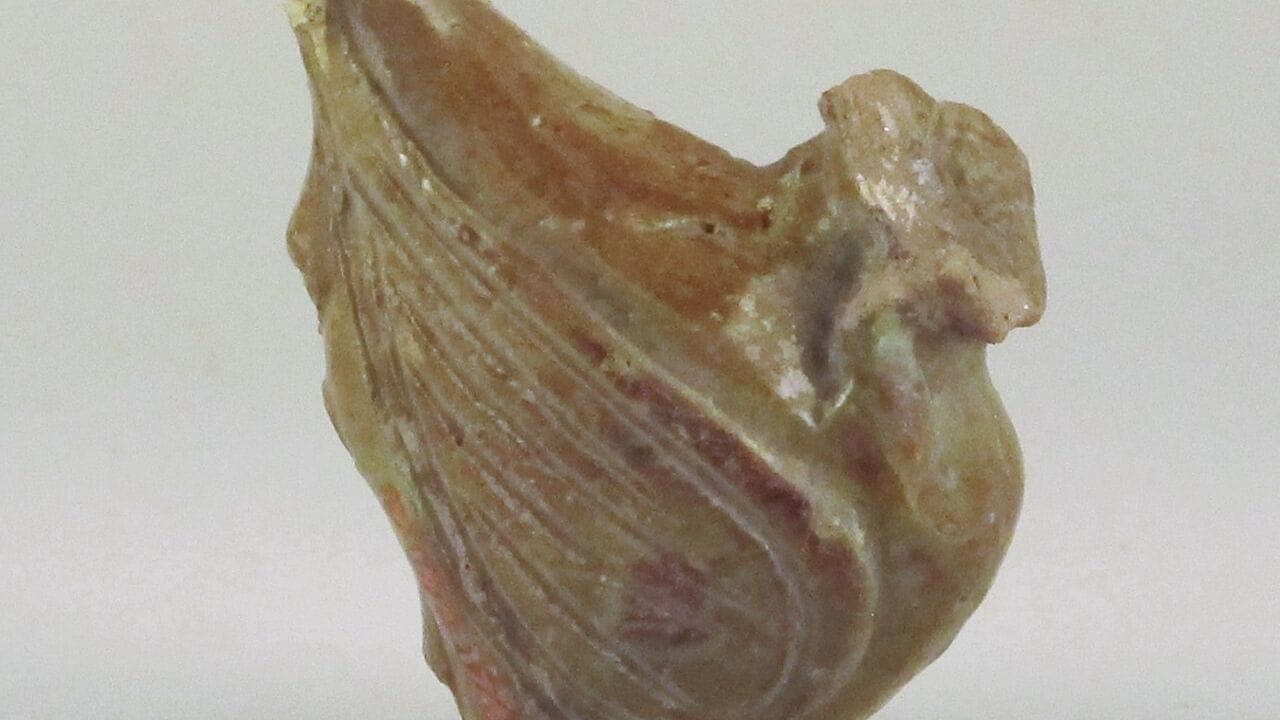
According to the National Council for Metal Detecting (NCMD), the British association of metal detectorists, one of its members entered a Roman figurine depicting a bird in last month's Finds Competition. The find was featured in the "Find of the Month" column published on 13 May 2026. It did not win the overall competition, but it sparked a very interesting discussion among the judges.
According to the NCMD's description, the object could be an item of religious significance, possibly a staff terminal or finial, meaning the decorative element that crowns the top of a shaft. This is a hypothesis put forward by the association. The source provides no details on dimensions, material, precise dating or find context, and does not say where it was found. For this reason, the attribution should be considered a preliminary reading, not an established fact.
The most curious part of the story concerns what happened after the evaluation. One of the judges, looking at the figure of the bird, recalled an old story his grandparents used to tell him: the tale of the crow and the pitcher. Digging deeper, the judges were surprised to discover that it was not simply a family story. It was a fable handed down over the centuries and attributed to Aesop, a slave and storyteller who lived in ancient Greece between 620 and 564 BC.
The fable is very simple. A thirsty crow finds a pitcher containing some water, but the level is too low and its beak cannot reach it. After failing to tip the vessel over, the bird begins to drop small pebbles into it. Little by little the water rises to the rim, and the crow can finally drink.
Over the centuries the story has been retold countless times, and each version has given rise to different morals and quotations. Among these, according to the NCMD, is an early twentieth-century adaptation that echoes the English proverb "Where there's a will, there's a way", the equivalent of the Italian "volere è potere". The association also points to the illustration accompanying its article, created by Milo Winter in 1919 and now in the public domain.
One point needs clarifying. The source reports no established link between the Roman figurine and Aesop's fable. The association only describes how the bird figure brought a memory to the surface for one of the judges, and how that memory led to discovering the story's long history. The value of the episode lies precisely in this path, which starts from an object and arrives at a cultural tradition more than two thousand years old.
The NCMD's closing comment sums up the spirit shared by many enthusiasts: this is why people love metal detecting. An object that may seem uninteresting at first glance can hide a surprising story, and sometimes a single question from someone looking at it is enough to bring that story out. For those who search, it is a useful reminder: the research does not end when the find comes out of the ground. Documenting it carefully, photographing it well and sharing it with people who can read it from another perspective is an integral part of the hobby, because every comparison can add a piece to our understanding.
The NCMD's monthly competition thus proves to be not only a showcase for members' finds, but also an opportunity for discussion and historical and cultural exploration, where even an item that does not win can leave its mark.