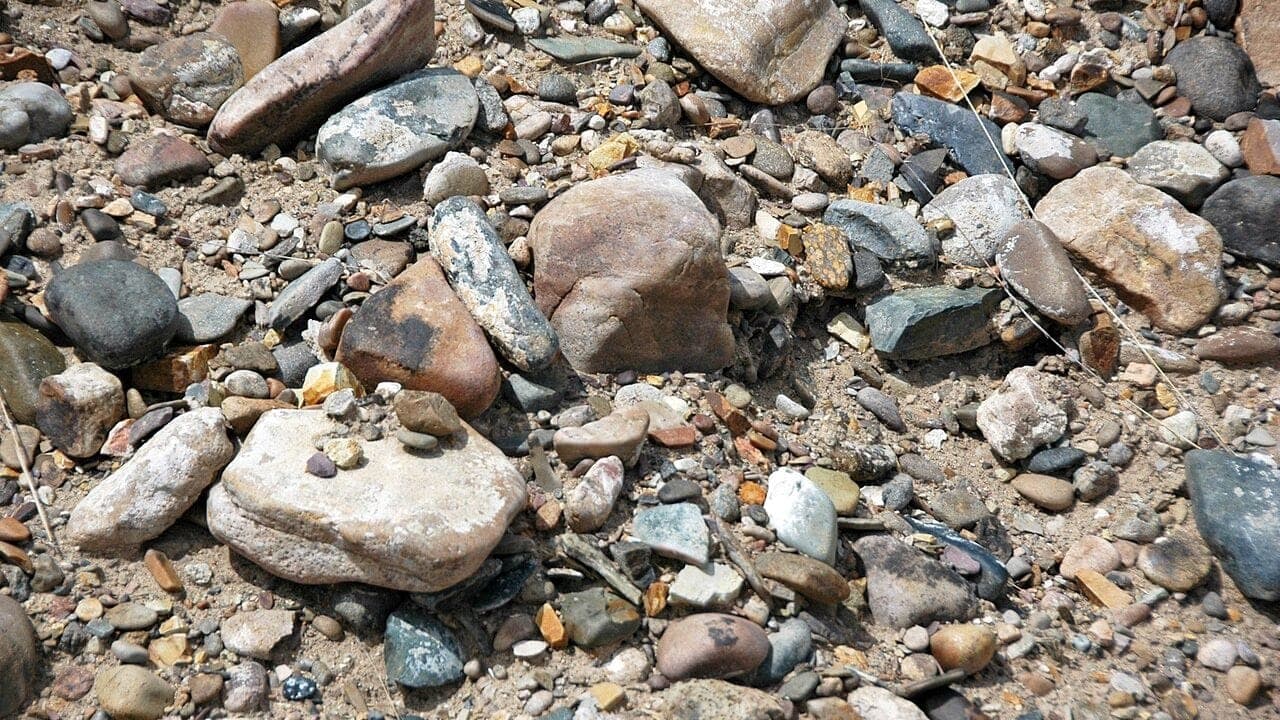
Many rivers in France carry gold, and panning for gold in riverbeds is enjoying a new wave of interest. Alongside this activity, however, prospecting for gemstones is also gaining ground: less well known, but increasingly popular. According to the blog Le Fouilleur, a particular example is the search for basaltic sapphires in the waterways of the Auvergne-Rhône-Alpes region.
The region is known for the Auvergne Volcanoes Regional Natural Park, which includes the Chaîne des Puys – Faille de Limagne, a UNESCO World Heritage site with its 80 volcanoes. It is a territory favourable to the formation of rare minerals. Some of them form at great depth, at extremely high temperatures, and are brought to the surface by eruptions: sapphires, for example, are said to form at temperatures between 620 and 670 degrees.
A key milestone dates back to 2016, when a major sapphire deposit was discovered near Issoire, in the Puy-de-Dôme department. The gems are believed to come from an ancient submarine volcano, eroded over time by a glacier, possibly during the final glacial phases. The exact location of the deposit remains unknown, but it is described as the largest sapphire deposit in continental Europe. The news sparked the curiosity of many enthusiasts, prompting them to search the streams and rivers of the area.
The blog's author recounts meeting François last year, an enthusiast of gold and mineral hunting who uses both a metal detector and a batea. Together with his friends, he had identified some promising spots and invited the author on an expedition to search for precious and semi-precious stones. There were five participants, and they headed for a small watercourse in the Auvergne-Rhône-Alpes region, for example along the banks of the Allier or the Loire in Auvergne.
Before setting out, the group checked whether the activity was legal. According to the blog, as with gold prospecting, searching for gemstones in rivers is permitted in France, provided it complies with the rules of the mining code and the environmental code. It must remain a recreational activity, with no commercial purpose, and the tools must be traditional: sieves, sluices and shovels. The use of mechanical equipment, such as dredges or electric pumps, is strictly prohibited.
There are, however, local differences: some departments have issued ordinances restricting the practice on certain waterways or even across their entire territory. Most tolerate it on prior request to the prefecture. For the expedition, all participants filled in an online application to the prefecture of Auvergne-Rhône-Alpes, a process that, the author reports, took only five minutes. Once approved, the permit allowed prospecting until the end of October, the closing date of the season in Auvergne.
Compared with gold prospecting, which requires a good understanding of fluid dynamics, searching for gemstones requires simpler equipment. The blog also suggests using a powerful prospecting magnet to remove magnetic black sand, rich in minerals such as magnetite and ilmenite, which is often a sign of the presence of sapphires and other gems.
For those who practise metal detecting and riverbed searching, this experience shows how prospecting can extend beyond metals. Staying informed about the rules in your own area is essential: in France, checking with the prefecture is the first step, and the seasonal nature of the permit should be kept in mind before organising any outing.